
loop
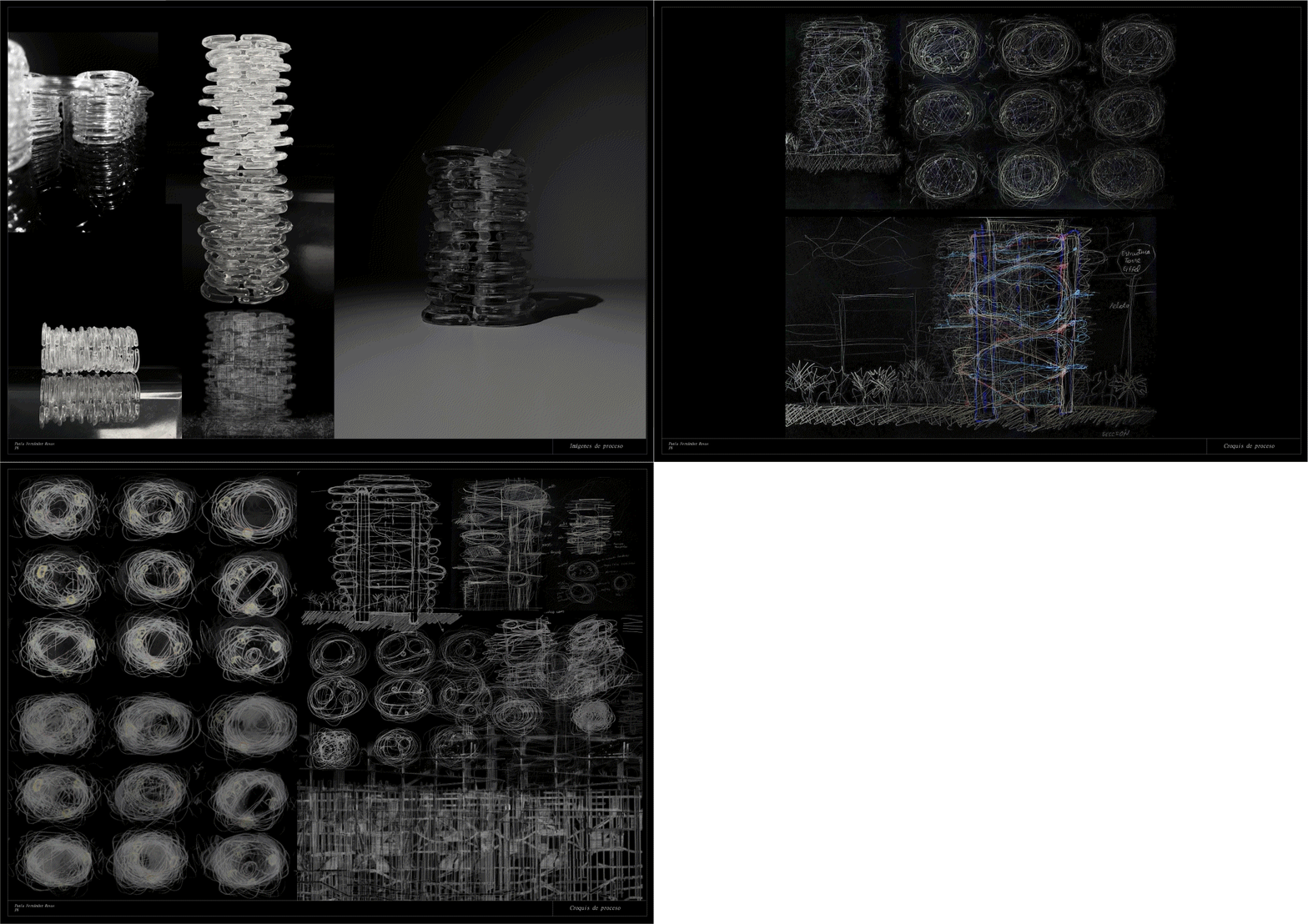
The project’s DNA originates in the initial process model: a superposition of the same piece, with singular characteristics (elliptical form, special materiality), stacked into a tower with the intention of creating a landmark that crowns the palm grove I propose for Elche.
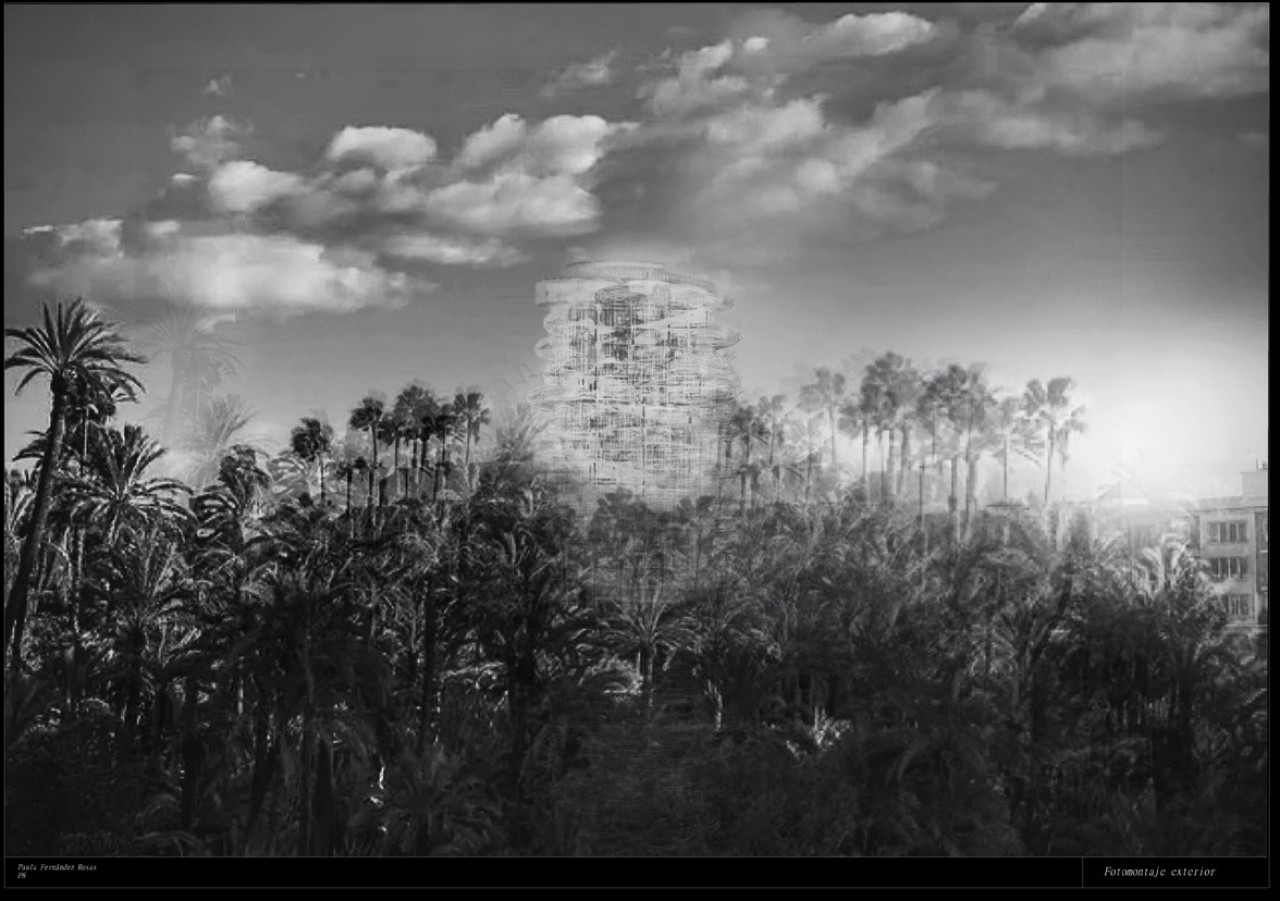
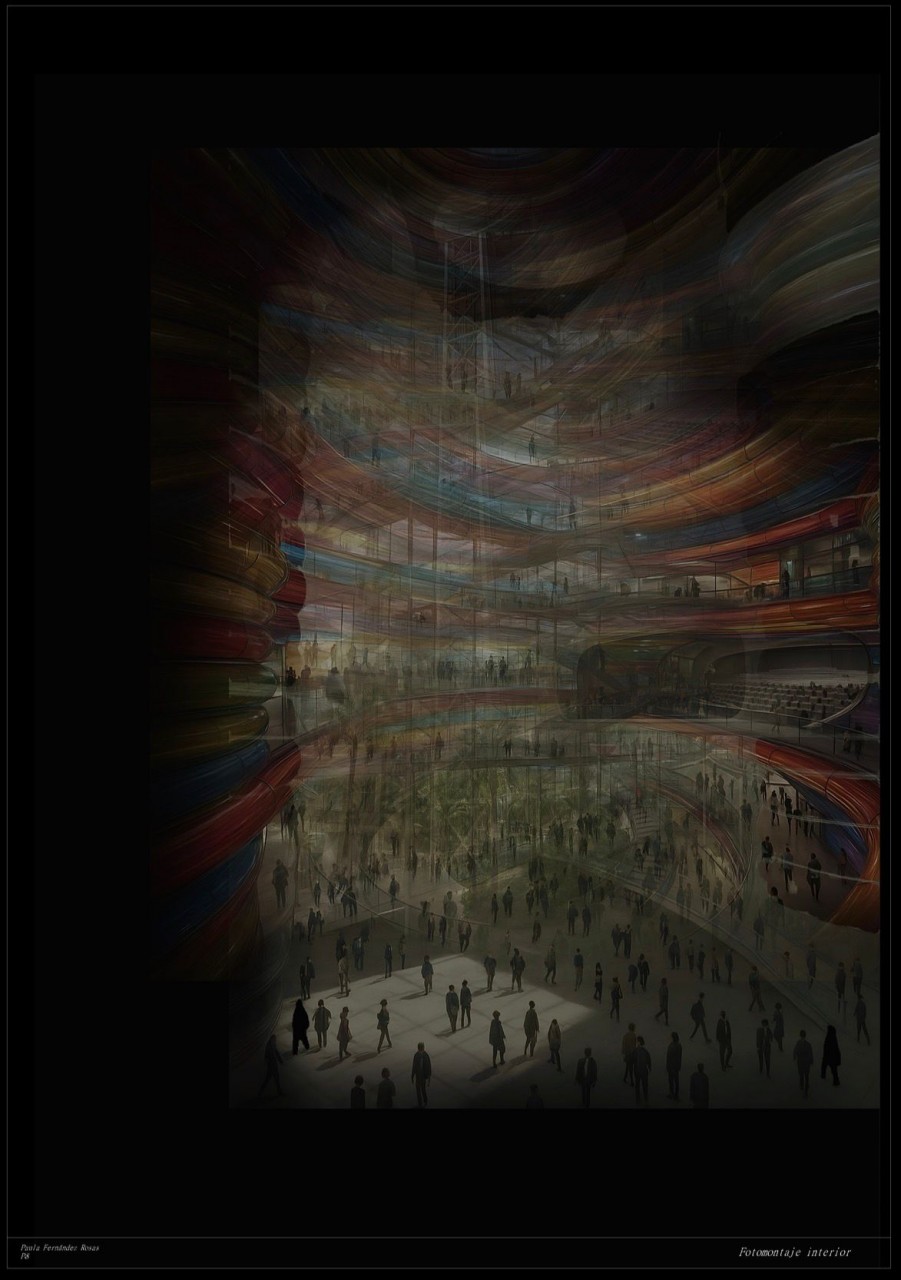
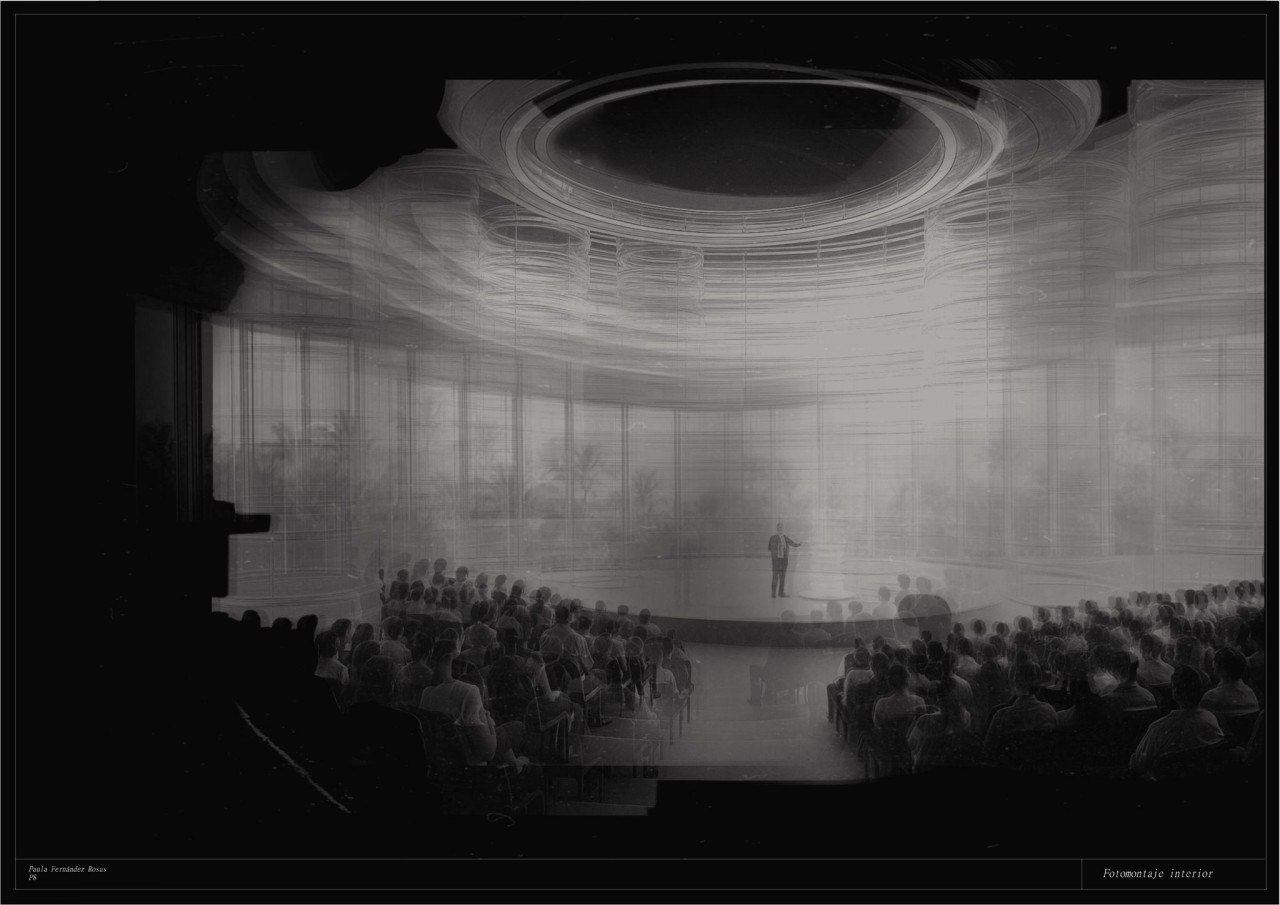
The photomontages represent the aspiration—the vision of what the project aims to become—addressing the essence of the values embodied by the model: translucency, materiality, circulation, curves, and immersive interior spaces and atmospheres.
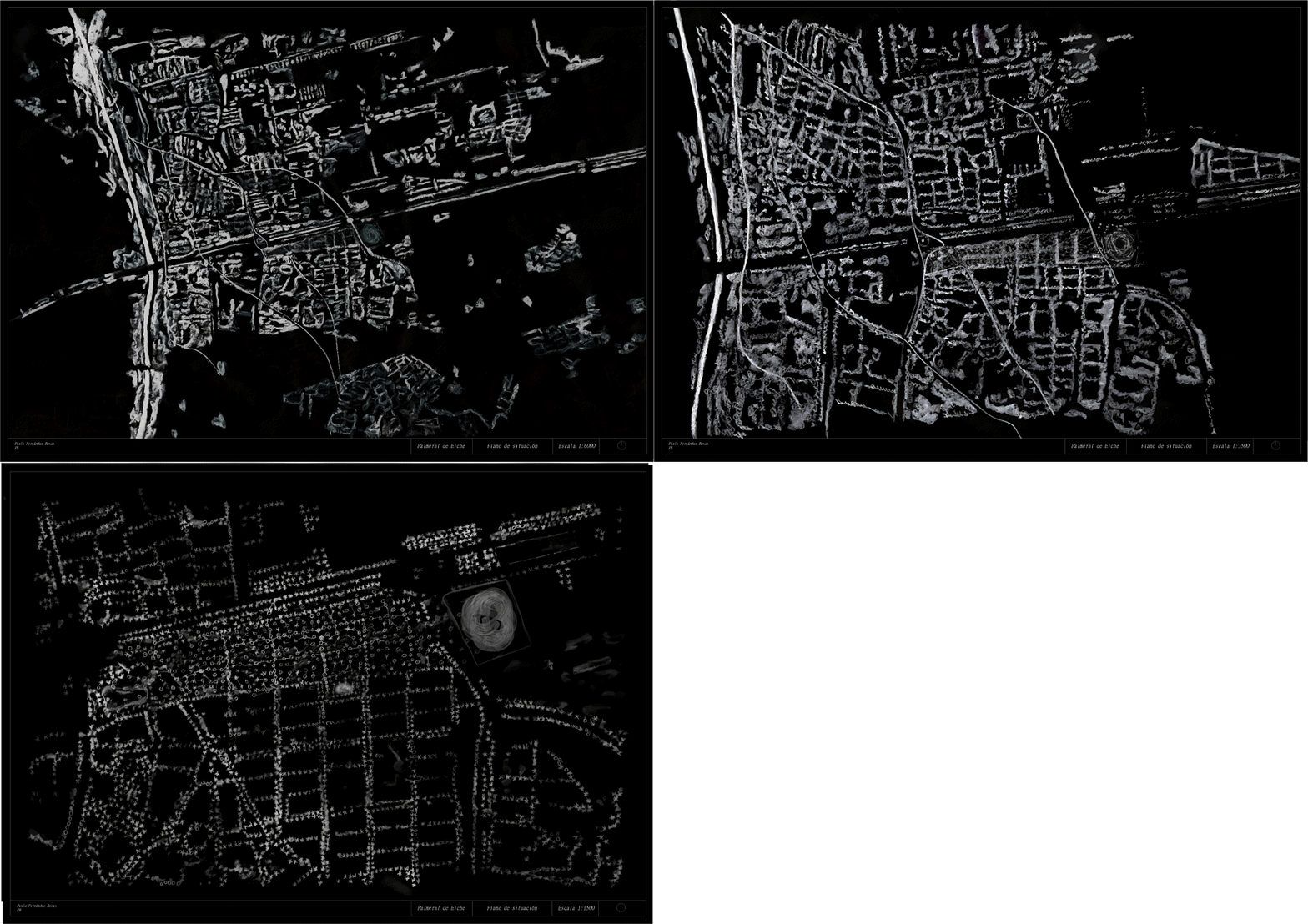
In urban terms, the site plans explain Elche by representing only the city’s palm tree fabric, a white-drawn pattern that reveals how the city is structured and, of course, what surrounds the plot where the congress center is located. In this way, the relationship between the proposed palm garden grid and the congress center can be understood.
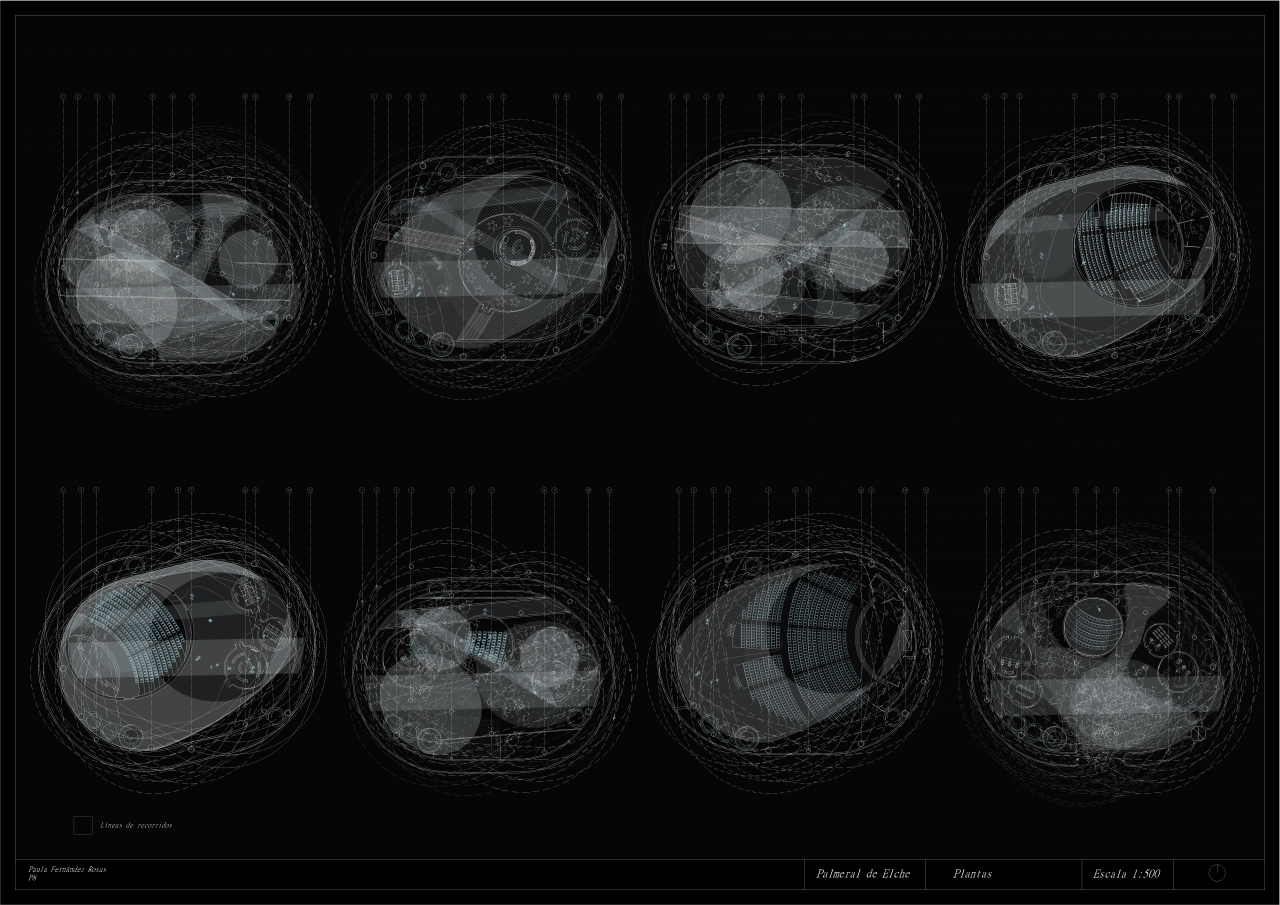
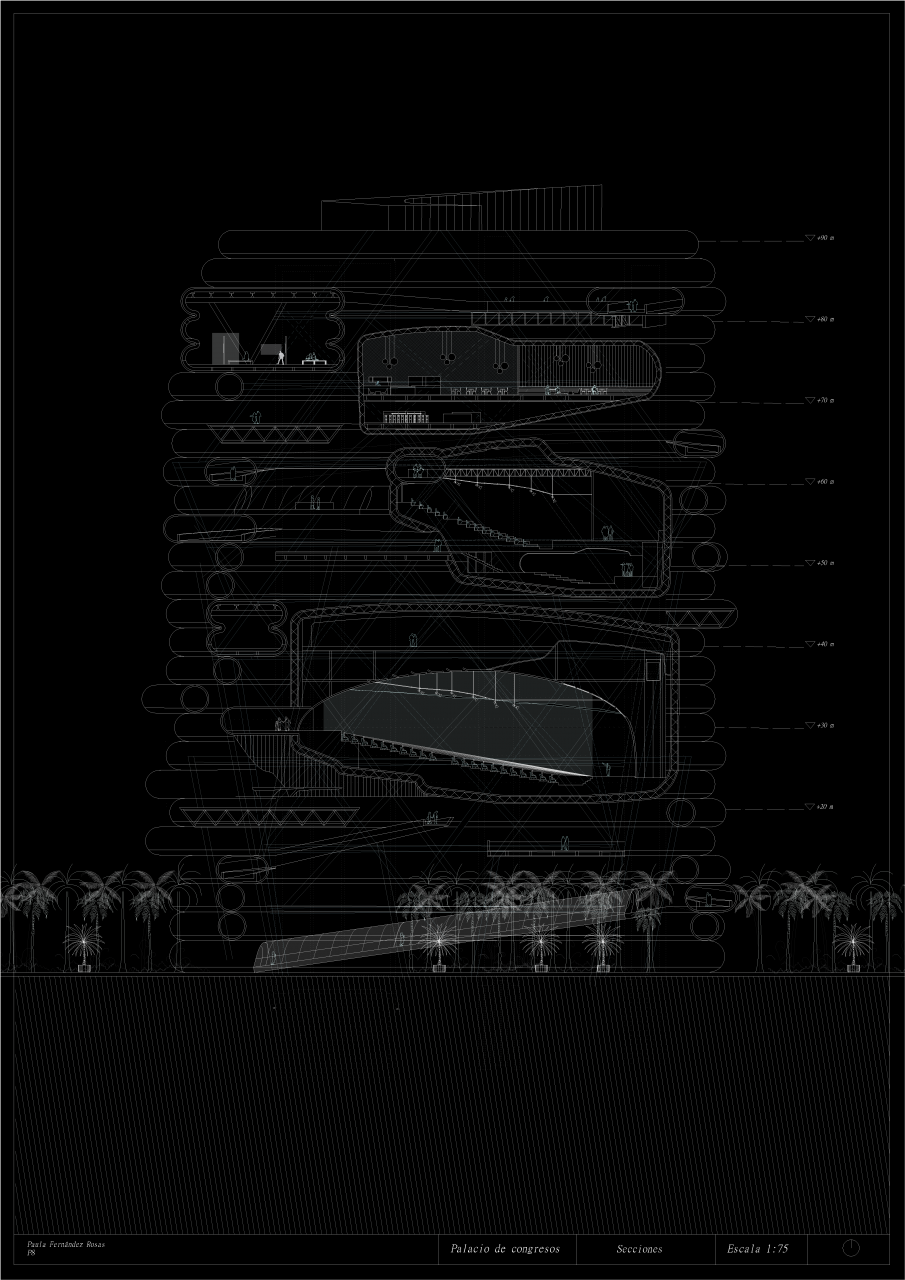
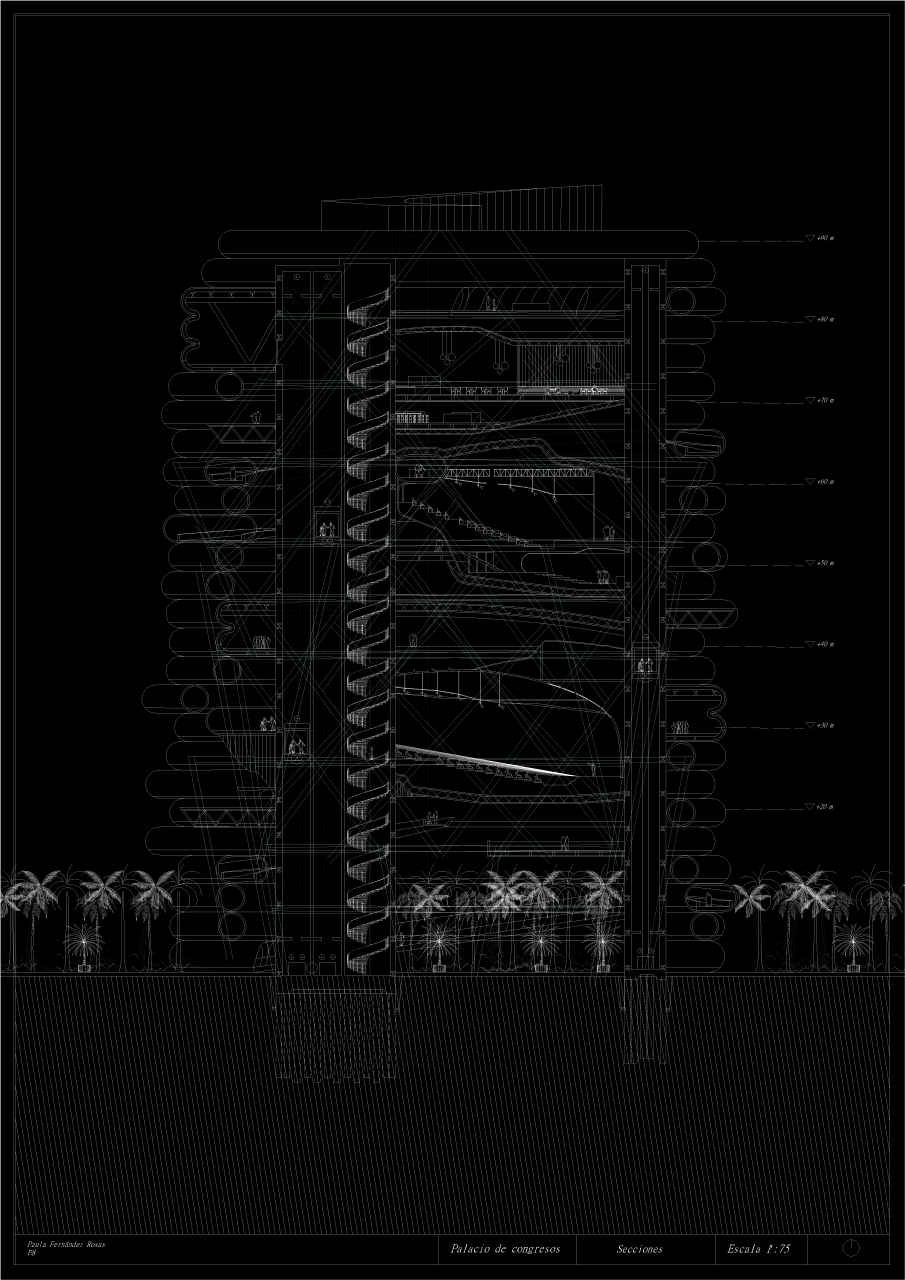
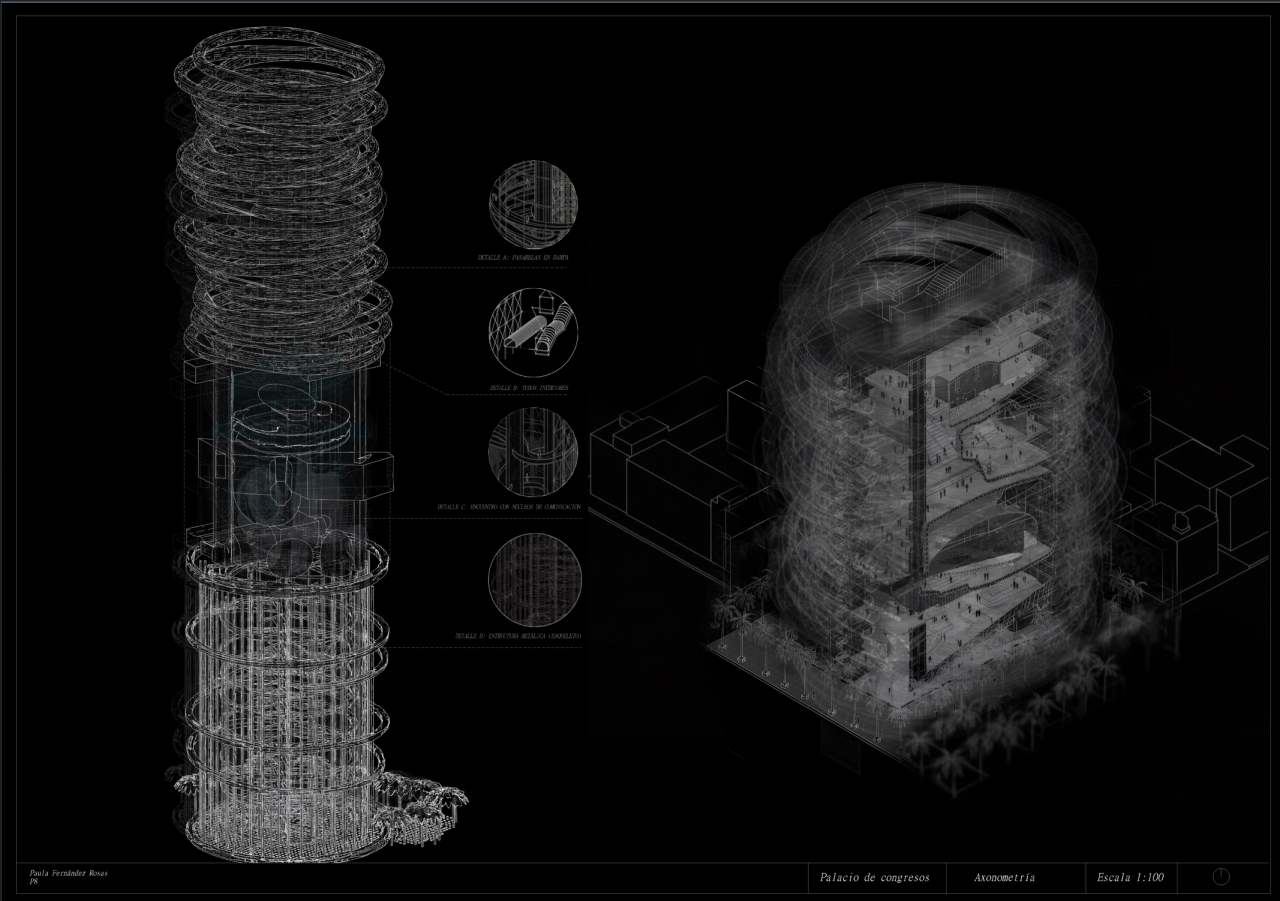
The rest of the drawings (plans, elevations, and sections) express an evolution in the understanding of the model, not only as an envelope of stacked tubes, but as a complex building with an internal structure composed of large vertical tubes serving as circulation cores, singular volumes housing the different programmatic elements (auditoriums, halls, foyer, offices, services, etc.), connecting elements (ramps and walkways), and a large metal skeleton that consolidates the entire structural system.
In a congress center, spaces of connection are of great importance, and in this project a fundamental aspect lies in these linking elements between volumes, and in the circulation through tubes, ramps, and walkways, as explained in the axonometric diagrams.
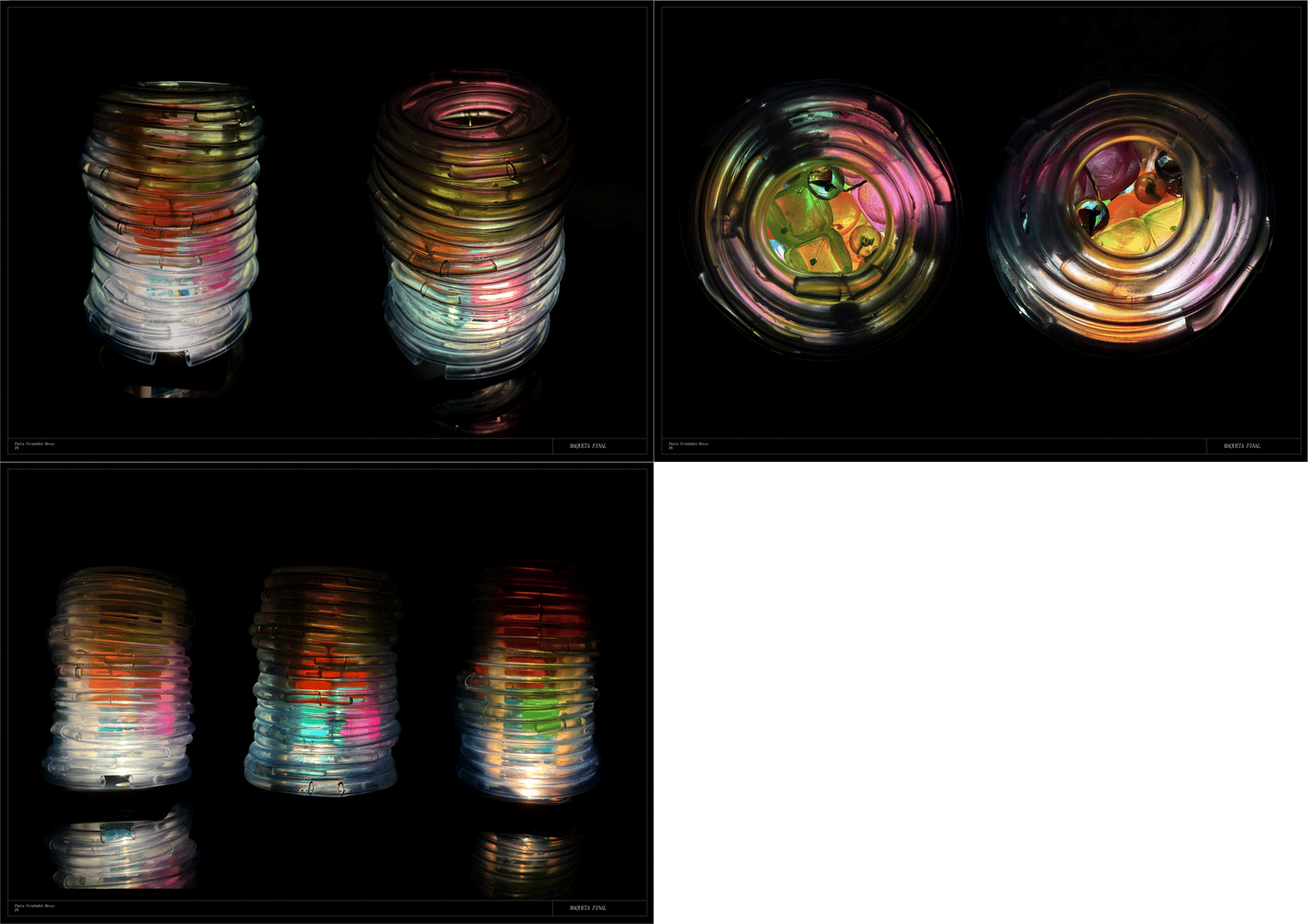
The final model is a synthesis of the project, understood as a body in which all the components act in an integrated manner, bringing together all the ambitions set out at the beginning.
The photomontages represent the aspiration—the vision of what the project aims to become—addressing the essence of the values embodied by the model: translucency, materiality, circulation, curves, and immersive interior spaces and atmospheres.
In urban terms, the site plans explain Elche by representing only the city’s palm tree fabric, a white-drawn pattern that reveals how the city is structured and, of course, what surrounds the plot where the congress center is located. In this way, the relationship between the proposed palm garden grid and the congress center can be understood.
The rest of the drawings (plans, elevations, and sections) express an evolution in the understanding of the model, not only as an envelope of stacked tubes, but as a complex building with an internal structure composed of large vertical tubes serving as circulation cores, singular volumes housing the different programmatic elements (auditoriums, halls, foyer, offices, services, etc.), connecting elements (ramps and walkways), and a large metal skeleton that consolidates the entire structural system.
In a congress center, spaces of connection are of great importance, and in this project a fundamental aspect lies in these linking elements between volumes, and in the circulation through tubes, ramps, and walkways, as explained in the axonometric diagrams.
The final model is a synthesis of the project, understood as a body in which all the components act in an integrated manner, bringing together all the ambitions set out at the beginning.
- 00 - Description
- 01 - Sketches
- 02 - Site plans
- 03 - Front view
- 04 - Interior view
- 05 - Interior view 2
- 06 - Plan
- 07 - Section
- 08 - Section2
- 09 - Axonometric view
- 10 - Model