
LOS LÍMITES DE LO URBANO
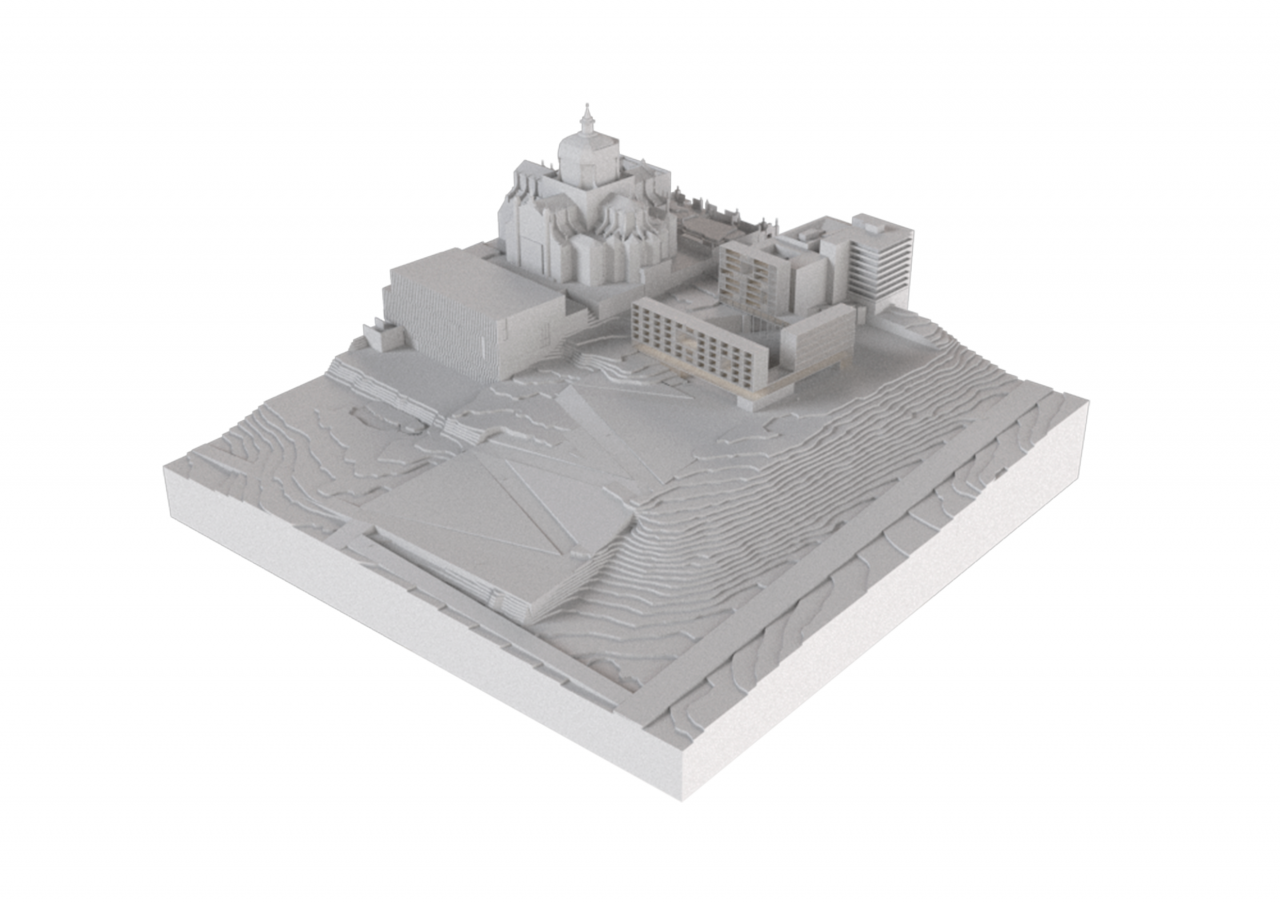
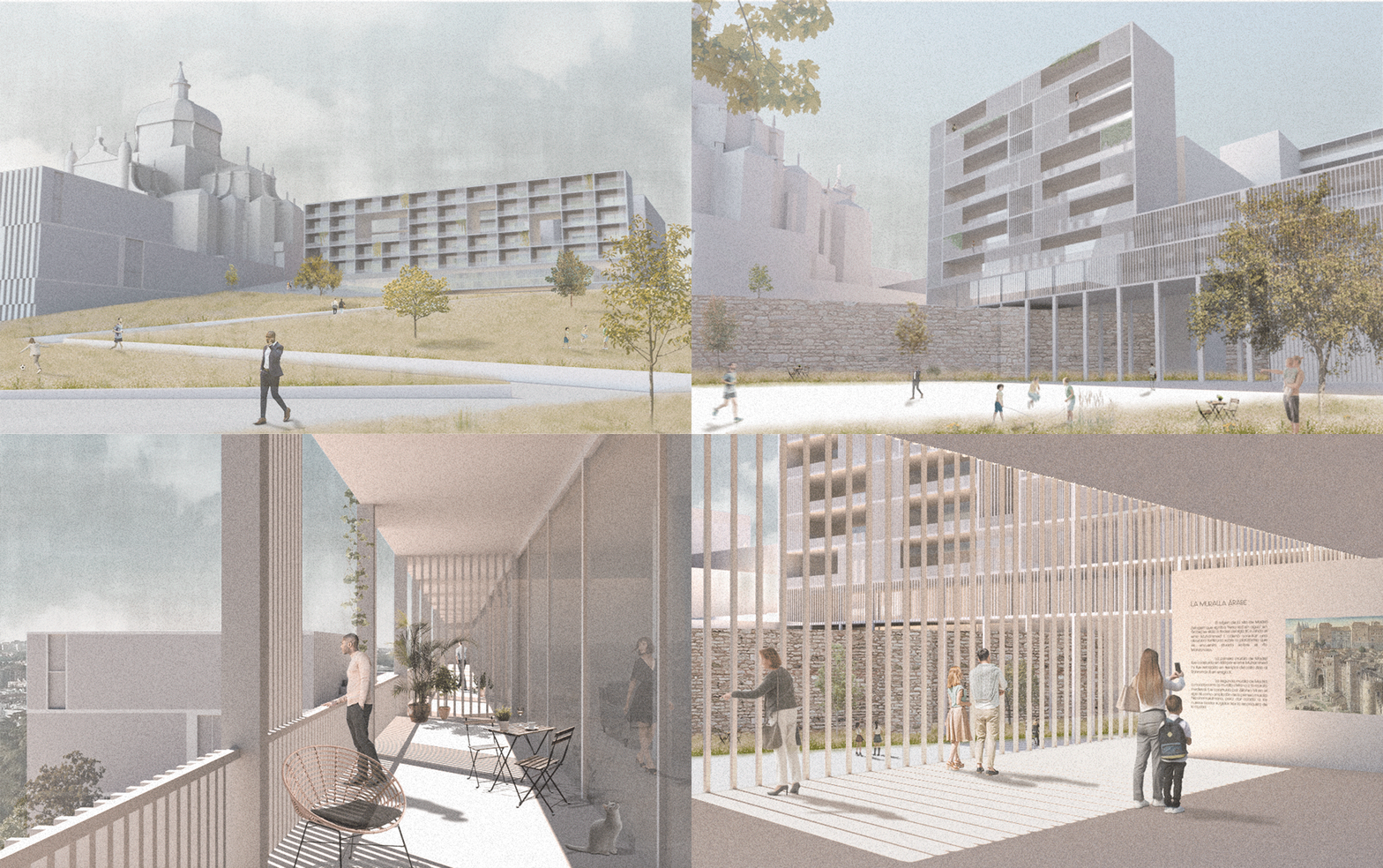
Behind the cathedral of La Almudena, we find the remains of the Arab wall of Madrid. In this very special context, marked by historic monuments such as the Royal Palace and the Cathedral itself and by new urban landmarks such as the Museum of Royal Collections, an intervention was proposed that sought to give importance to these archaeological remains and to resolve the requested programme.
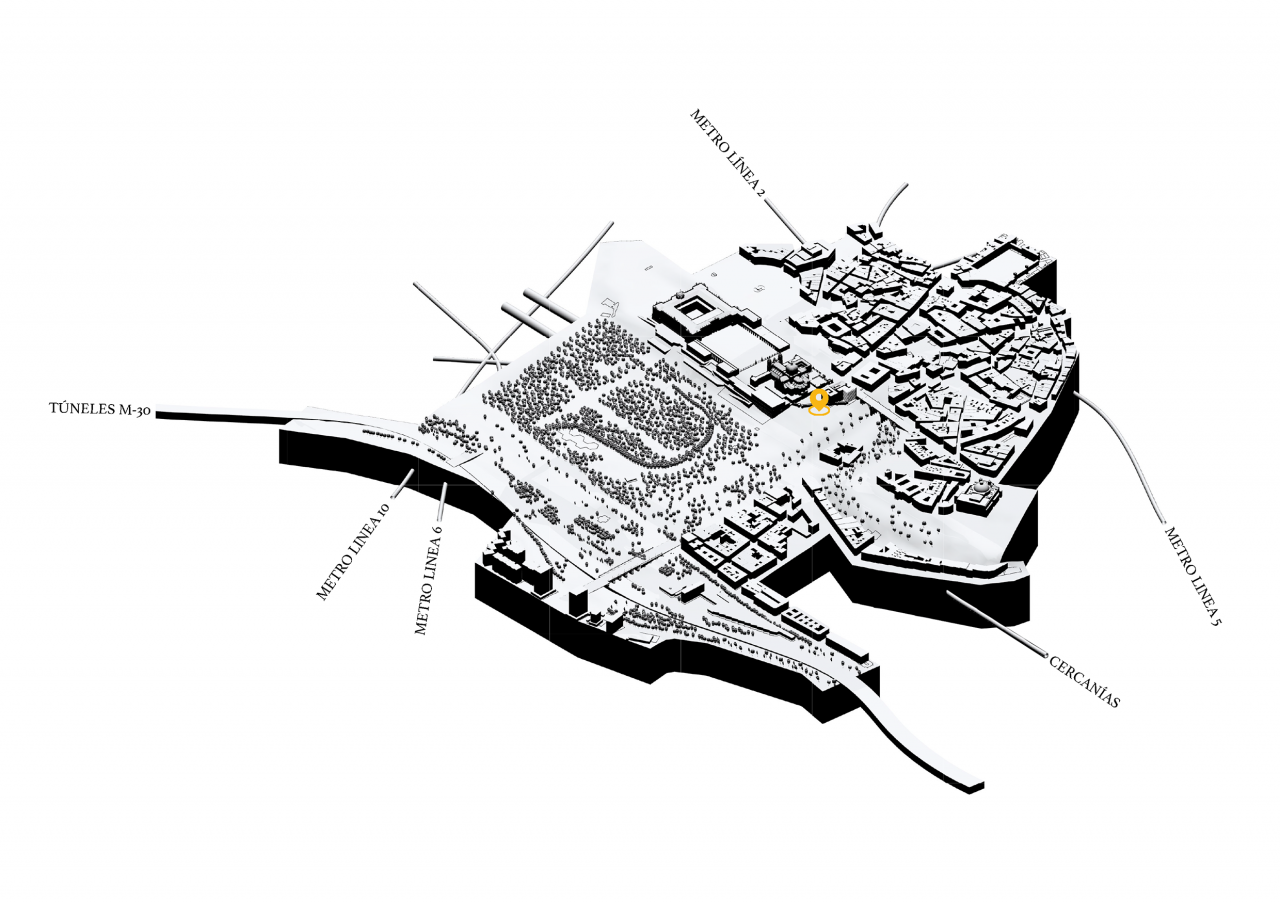
After an exhaustive process of analysis of the area, it was decided to eliminate road traffic from the Cuesta de la Vega in order to recover its original zigzag route, thus creating a pedestrian route that connects Madrid Rio with the Madrid cornice. This proposal not only seeks to improve the aesthetic and functional quality of the site, but also to revitalise a space that has not yet been able to realise its full potential.
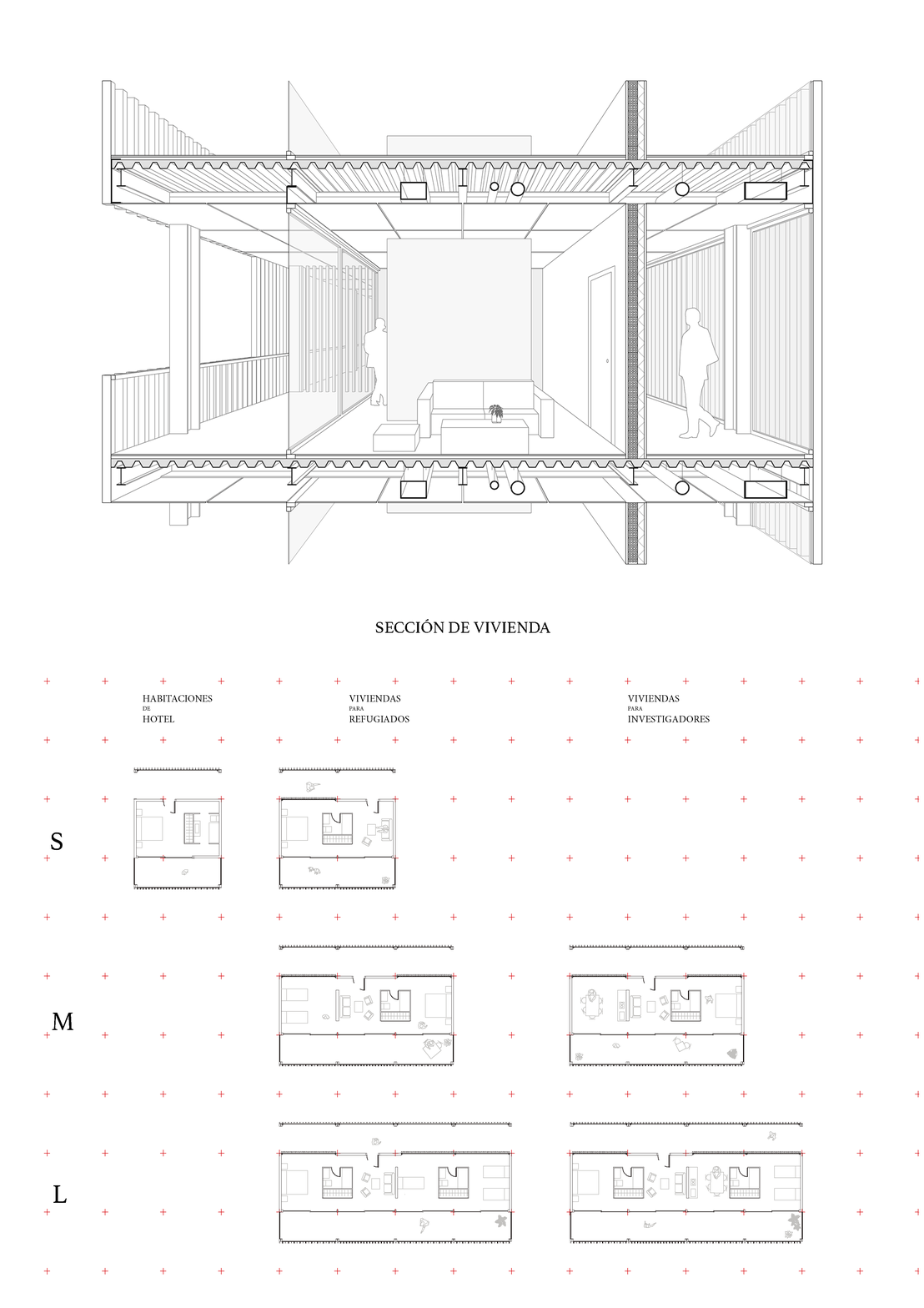
As an organising base, a 4x4 meters module is defined, from which all the dwellings are composed according to the specific needs of each one. All of these are divided into an intermediate space of 4 meters wide, destined for the served spaces, and another two of 2 meters for terraces and circulations. The wet areas are located in the centre of the dwellings, thus freeing up all the façades and making the circulations more flexible.
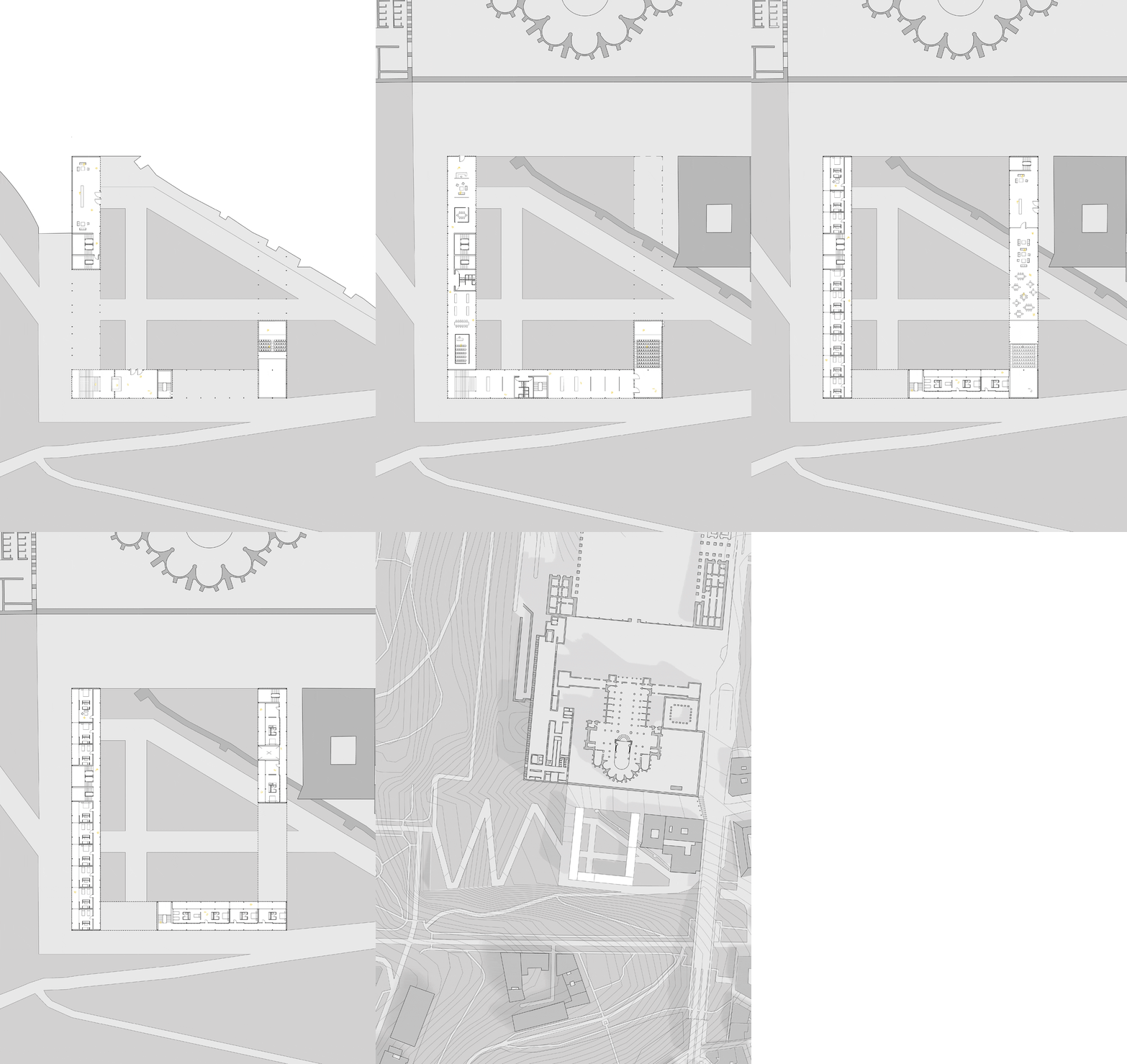
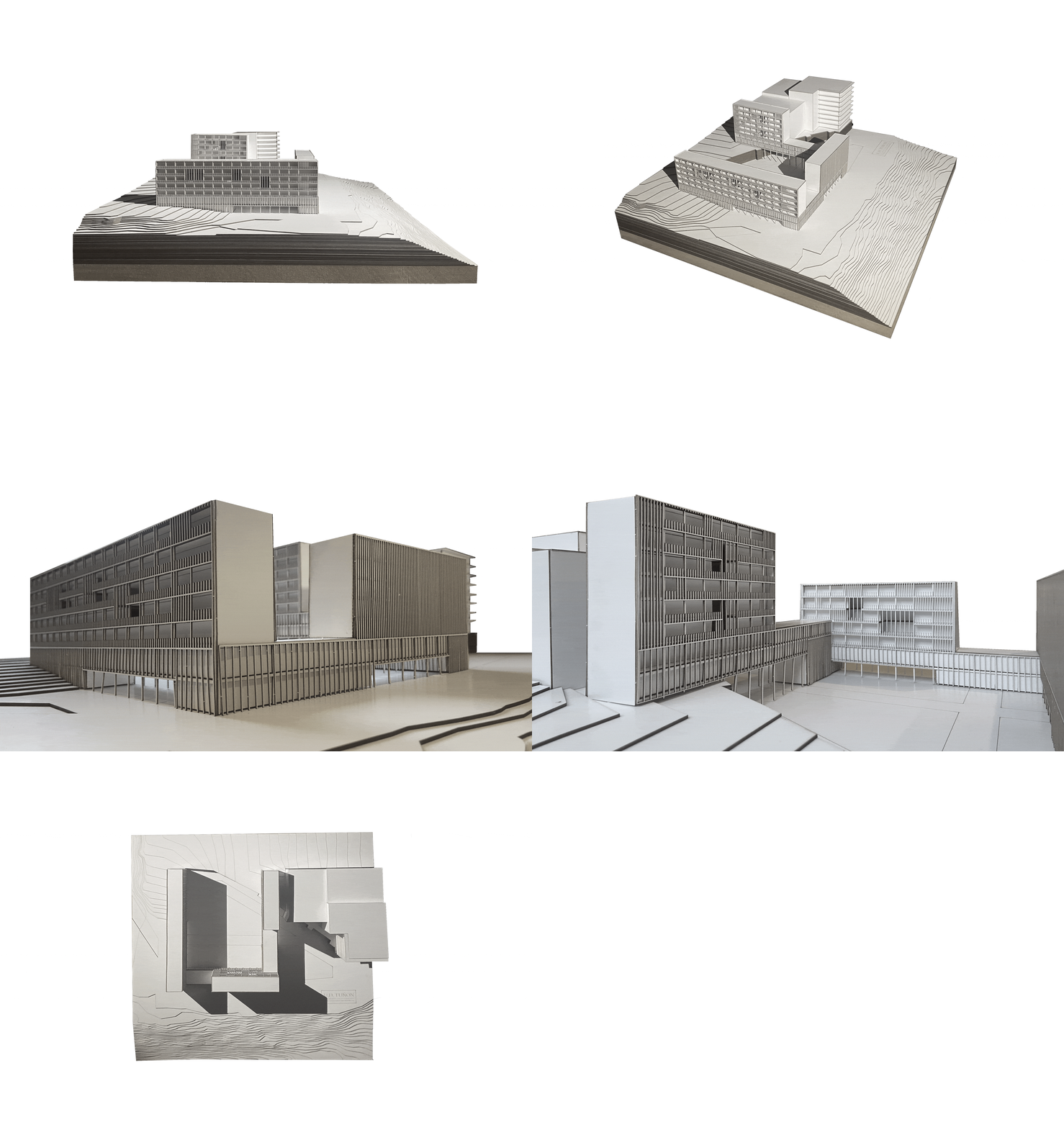
As for the main idea of the complex, the aim is to complete the free plot around the wall with a U-shaped complex that creates a central courtyard that enhances the value of the Arab remains. The ground floor, divided into three blocks, houses the entrances to the main uses of the building, as well as an auditorium with a capacity for 90 people. The permeability of the ground floor connects the courtyard with the rest of the city. Above this, both the Museum, on the south side, and the research area of the Walls of Madrid will be located.
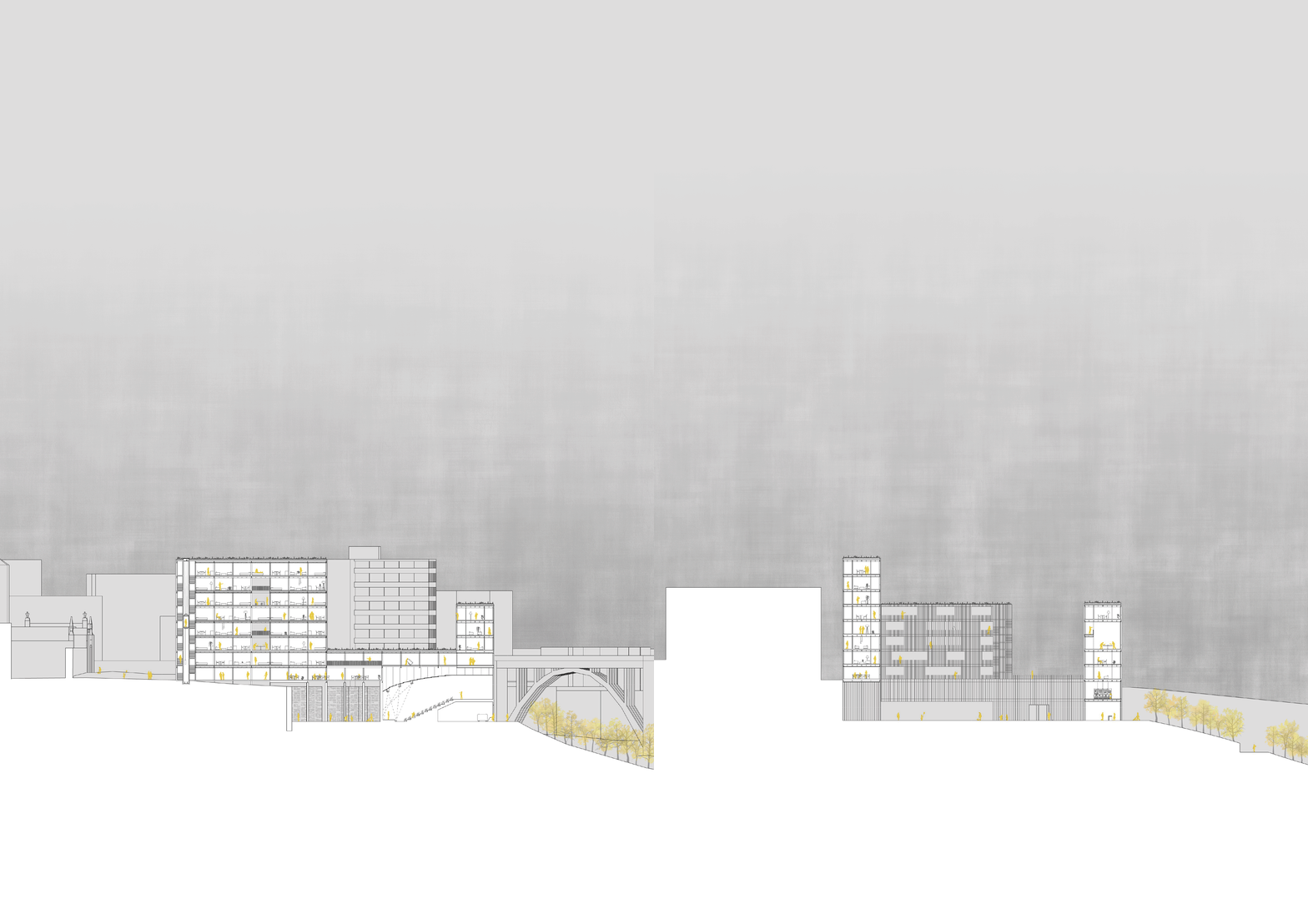
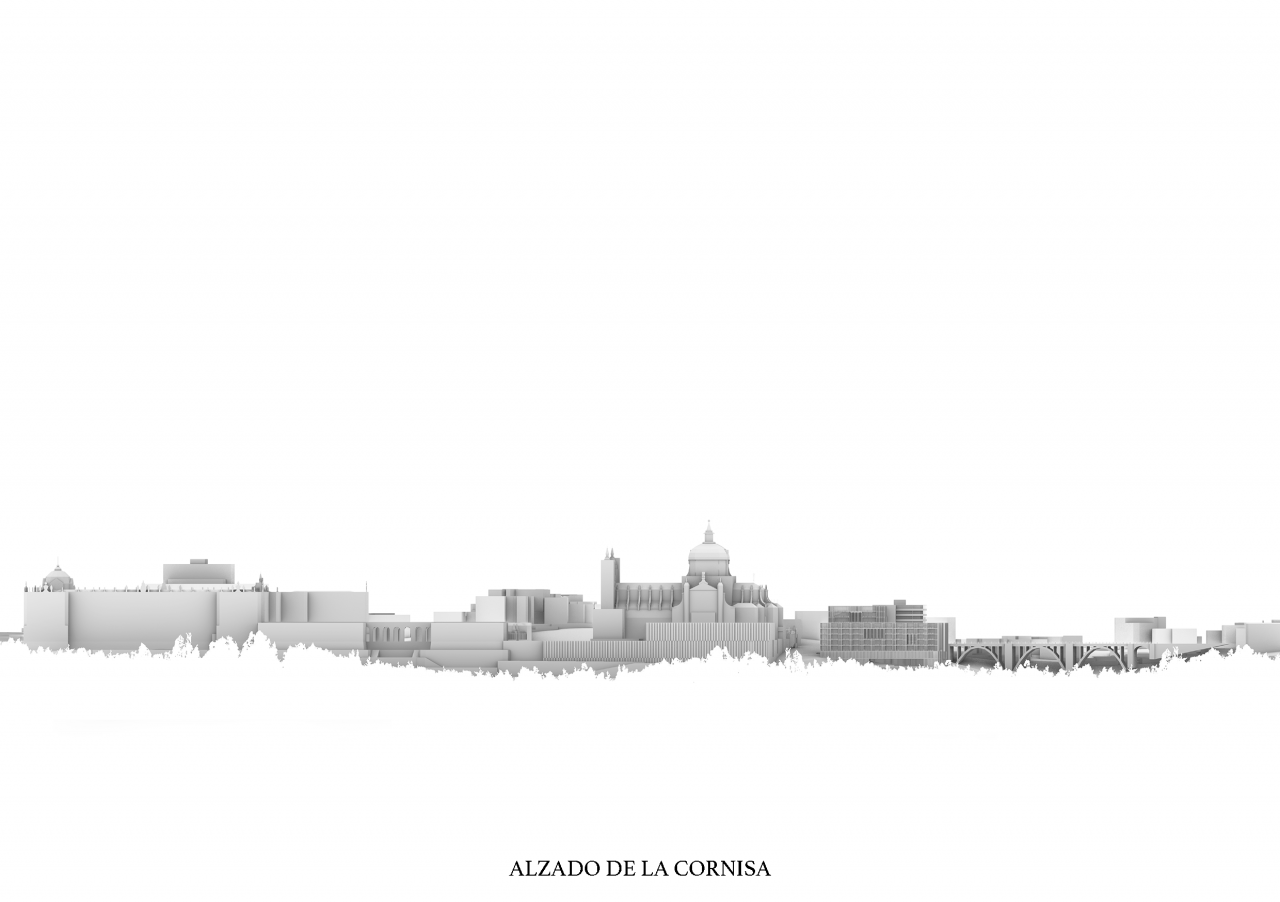
On the upper levels, are located the different housing hubs. On the west elevation is the Hotel, with the rooms facing the Cuesta de la Vega. Its height, 26 metres, is equal to the height of the museum of royal collections, thus accentuating the horizontality and continuity of the cornice of Madrid.
The other two halls, on the other hand, direct their terraces towards the central courtyard in search of greater privacy. In the southern block is the building for temporary housing and, finally, the researcher's housing building is concentrated on the east elevation, thus concealing the large party wall of the adjoining building.
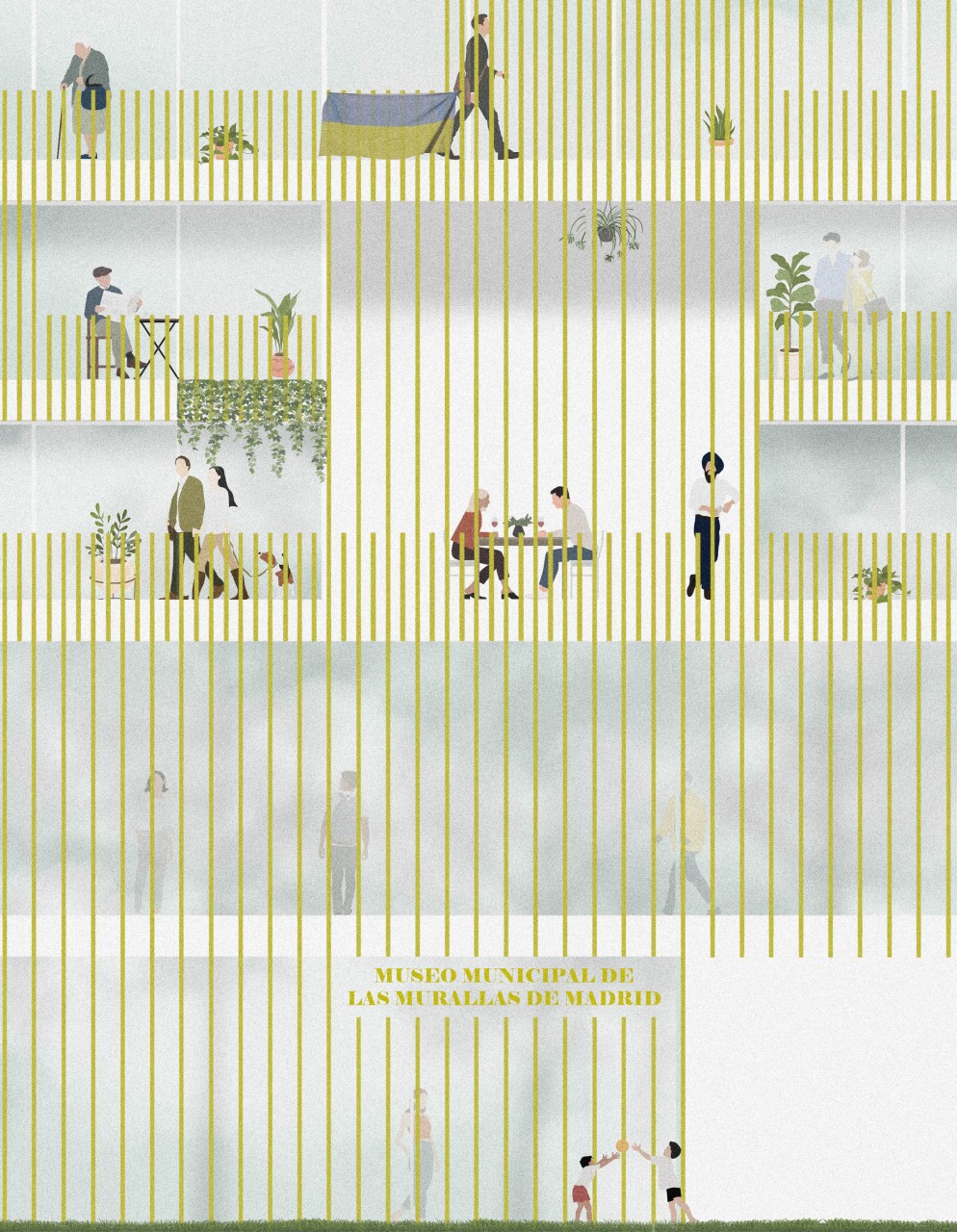
In addition, the façade is composed from a matrix of fine slats, which allow the density and therefore the transparency to be adjusted according to the use of each space, giving a certain uniformity to the whole complex, as well as a changing appearance in all its facades.
The project is a constant search for balance between accentuating the skyline and blurring the urban limit.
After an exhaustive process of analysis of the area, it was decided to eliminate road traffic from the Cuesta de la Vega in order to recover its original zigzag route, thus creating a pedestrian route that connects Madrid Rio with the Madrid cornice. This proposal not only seeks to improve the aesthetic and functional quality of the site, but also to revitalise a space that has not yet been able to realise its full potential.
As an organising base, a 4x4 meters module is defined, from which all the dwellings are composed according to the specific needs of each one. All of these are divided into an intermediate space of 4 meters wide, destined for the served spaces, and another two of 2 meters for terraces and circulations. The wet areas are located in the centre of the dwellings, thus freeing up all the façades and making the circulations more flexible.
As for the main idea of the complex, the aim is to complete the free plot around the wall with a U-shaped complex that creates a central courtyard that enhances the value of the Arab remains. The ground floor, divided into three blocks, houses the entrances to the main uses of the building, as well as an auditorium with a capacity for 90 people. The permeability of the ground floor connects the courtyard with the rest of the city. Above this, both the Museum, on the south side, and the research area of the Walls of Madrid will be located.
On the upper levels, are located the different housing hubs. On the west elevation is the Hotel, with the rooms facing the Cuesta de la Vega. Its height, 26 metres, is equal to the height of the museum of royal collections, thus accentuating the horizontality and continuity of the cornice of Madrid.
The other two halls, on the other hand, direct their terraces towards the central courtyard in search of greater privacy. In the southern block is the building for temporary housing and, finally, the researcher's housing building is concentrated on the east elevation, thus concealing the large party wall of the adjoining building.
In addition, the façade is composed from a matrix of fine slats, which allow the density and therefore the transparency to be adjusted according to the use of each space, giving a certain uniformity to the whole complex, as well as a changing appearance in all its facades.
The project is a constant search for balance between accentuating the skyline and blurring the urban limit.

- 00 - Description
- 01 - Site's analysis
- 02 - Housing modules
- 03 - Floor plans
- 04 - Sections
- 05 - Axonometric
- 06 - 'Cornisa de Madrid'
- 07 - Facade
- 08 - Construction system
- 09 - Model photos
- 10 - Project images
- 11 - Video