
memoria industrial
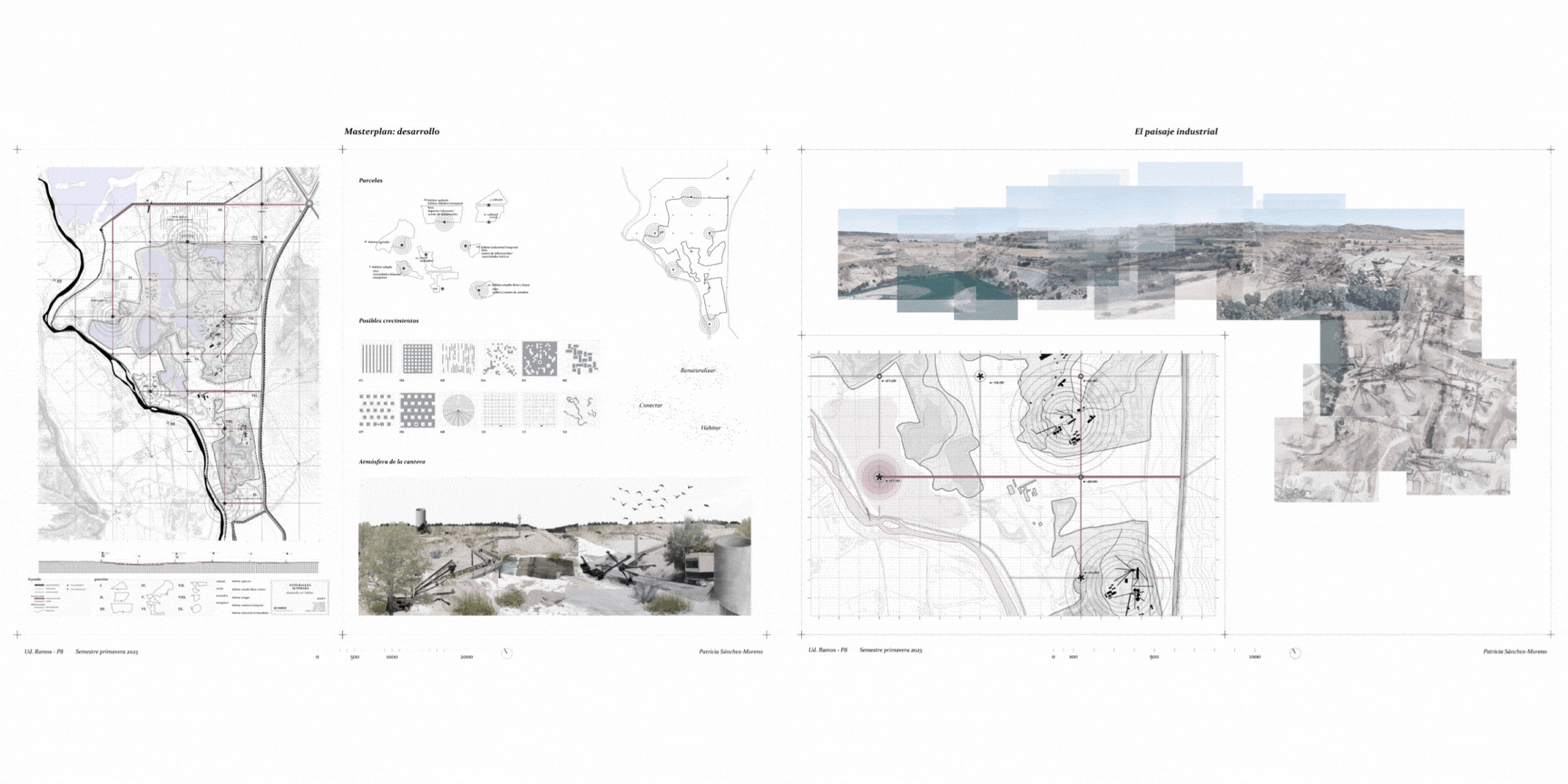
The project is located in the Parque Regional del Sureste de Madrid. A neglected place, in ruins and colonised by the mining industry, which has left quarries like scars on the landscape. The fusion of large mining machinery with nature has redefined this landscape, giving it a unique image. Maintaining the idiosyncrasy of the place will be the fundamental principle guiding this project.
It is part of a master plan that aims to renaturalise and make this landscape habitable. It is based on the interconnection of the quarries through a three-dimensional grid that crosses them. The intersections of the grid become potential landmarks for generating habitats.
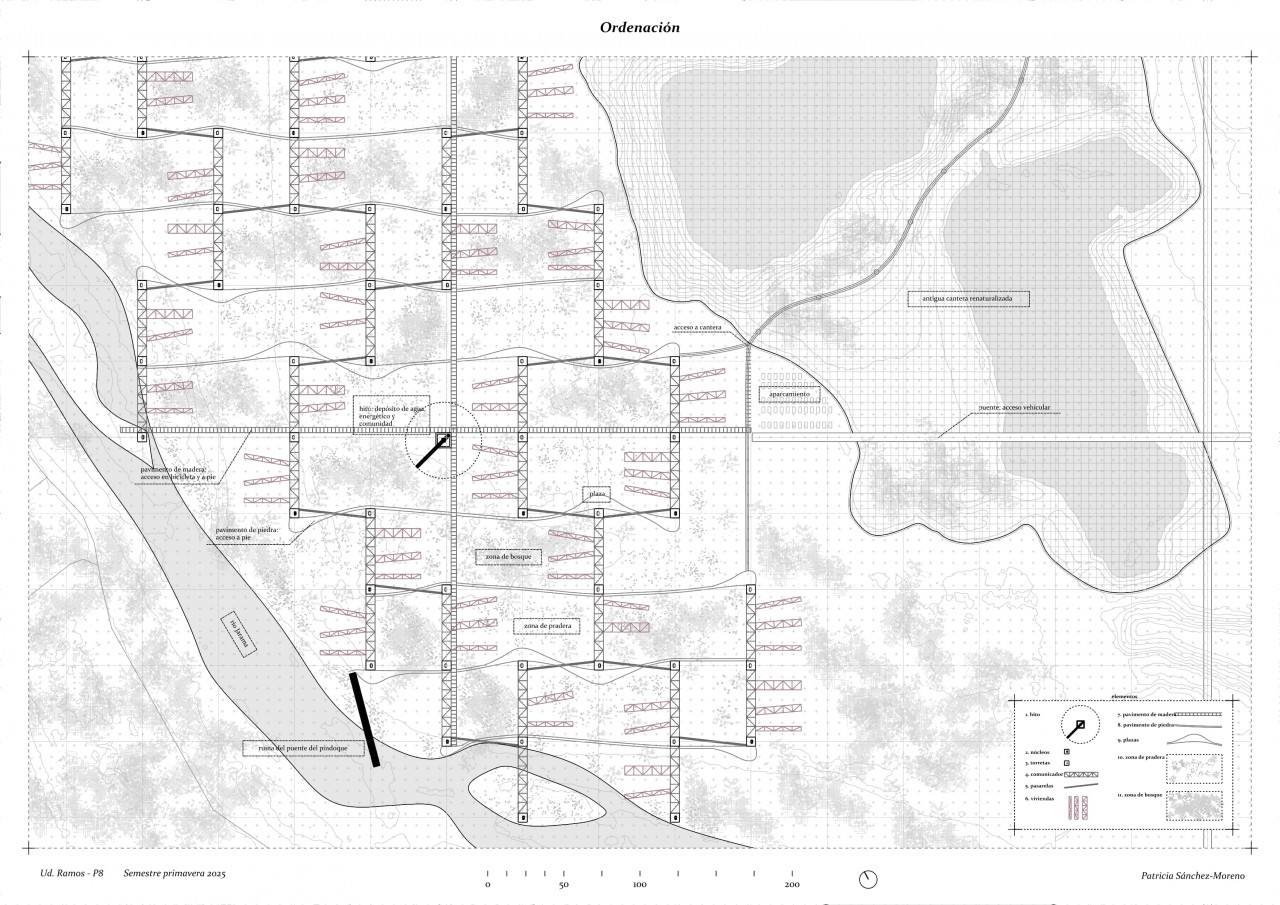
This project works on one of these habitats, located between an access road to the area, several quarries and the Jarama river. In this context, it explores the possibilities of reinterpreting the structure of mining machines, thinking them through to create new ways of inhabiting. The proposal is developed from the trusses that form the main body of these machines.
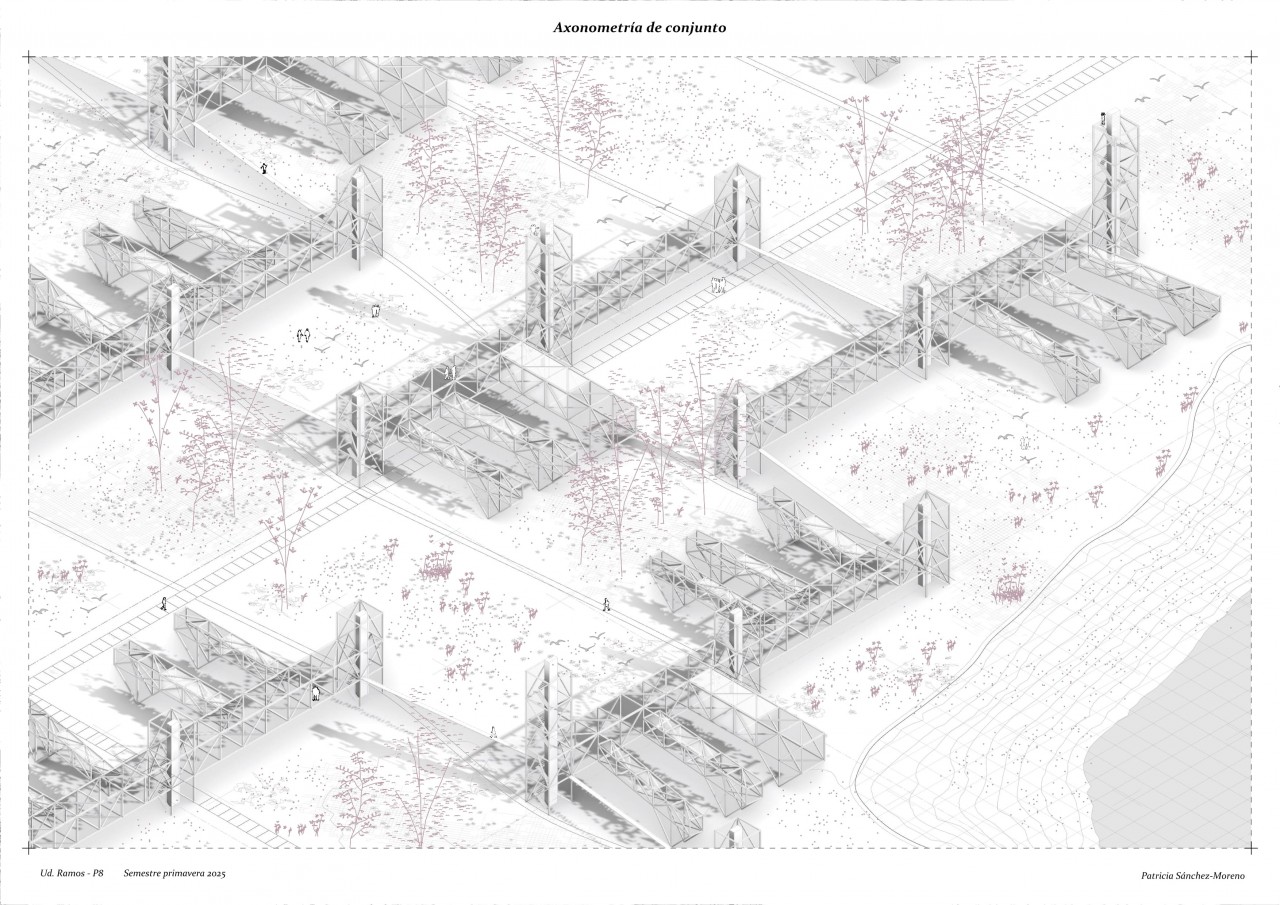
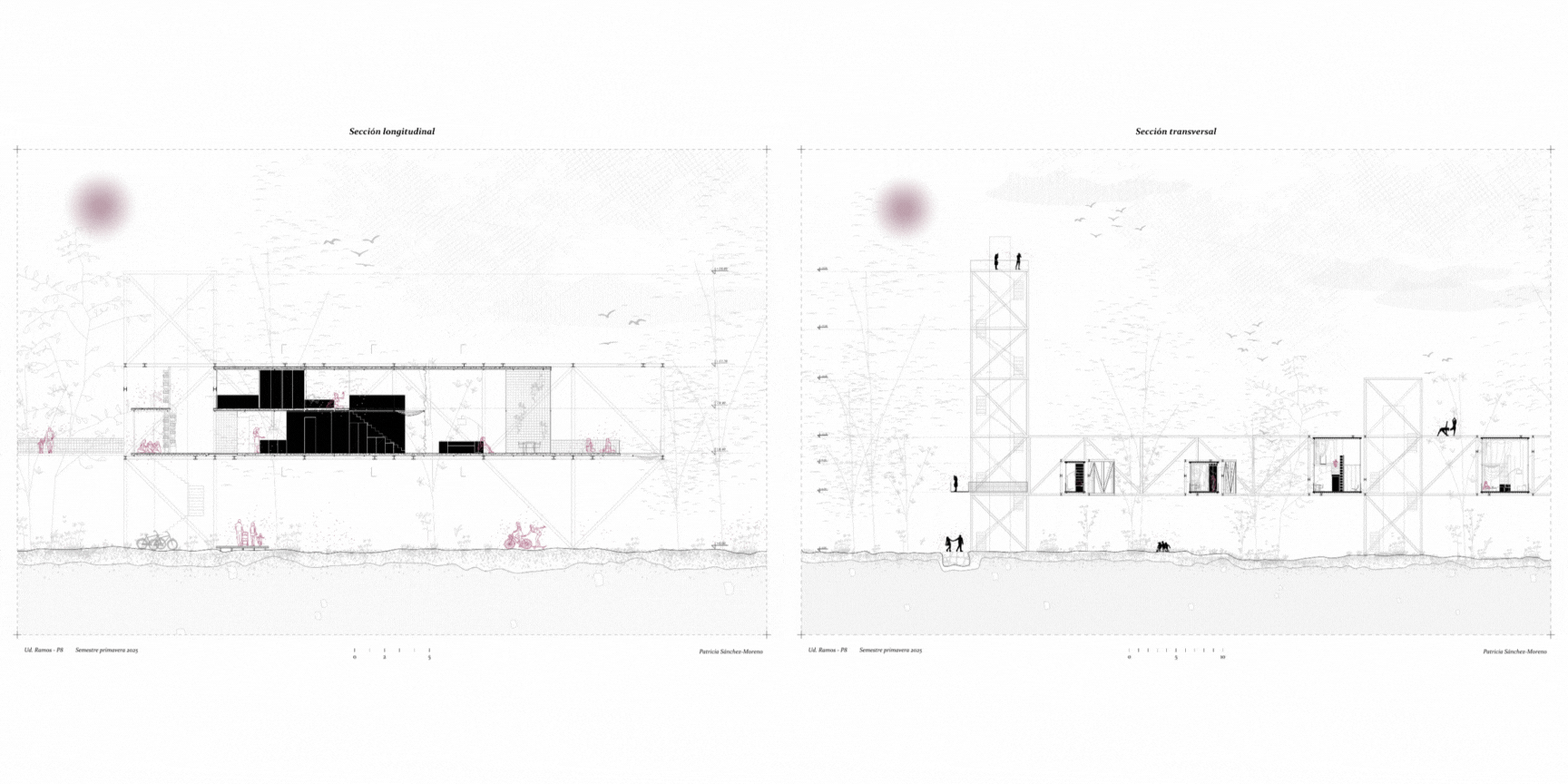
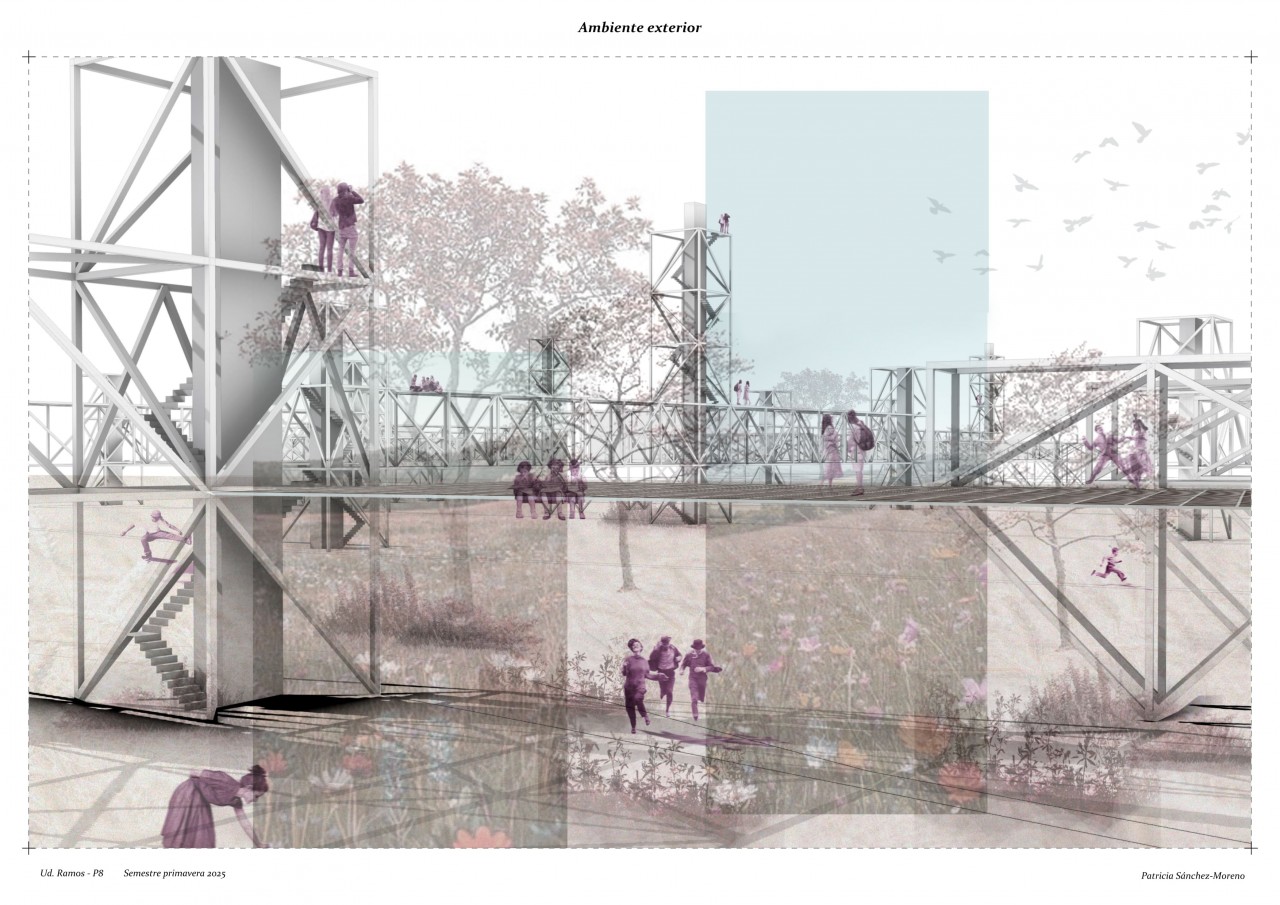
It is a system conceived as a network of connections into which the pieces that give meaning to the whole are inserted. A series of cores and turrets are implanted to provide access to bridge structures open to the landscape, where circulation widens to accommodate multiple programmes. They also provide access to the different dwellings, which appear to be in motion. Thus, the architecture rises above a renaturalised field that is to be left intact, to generate a higher plane of contemplation.
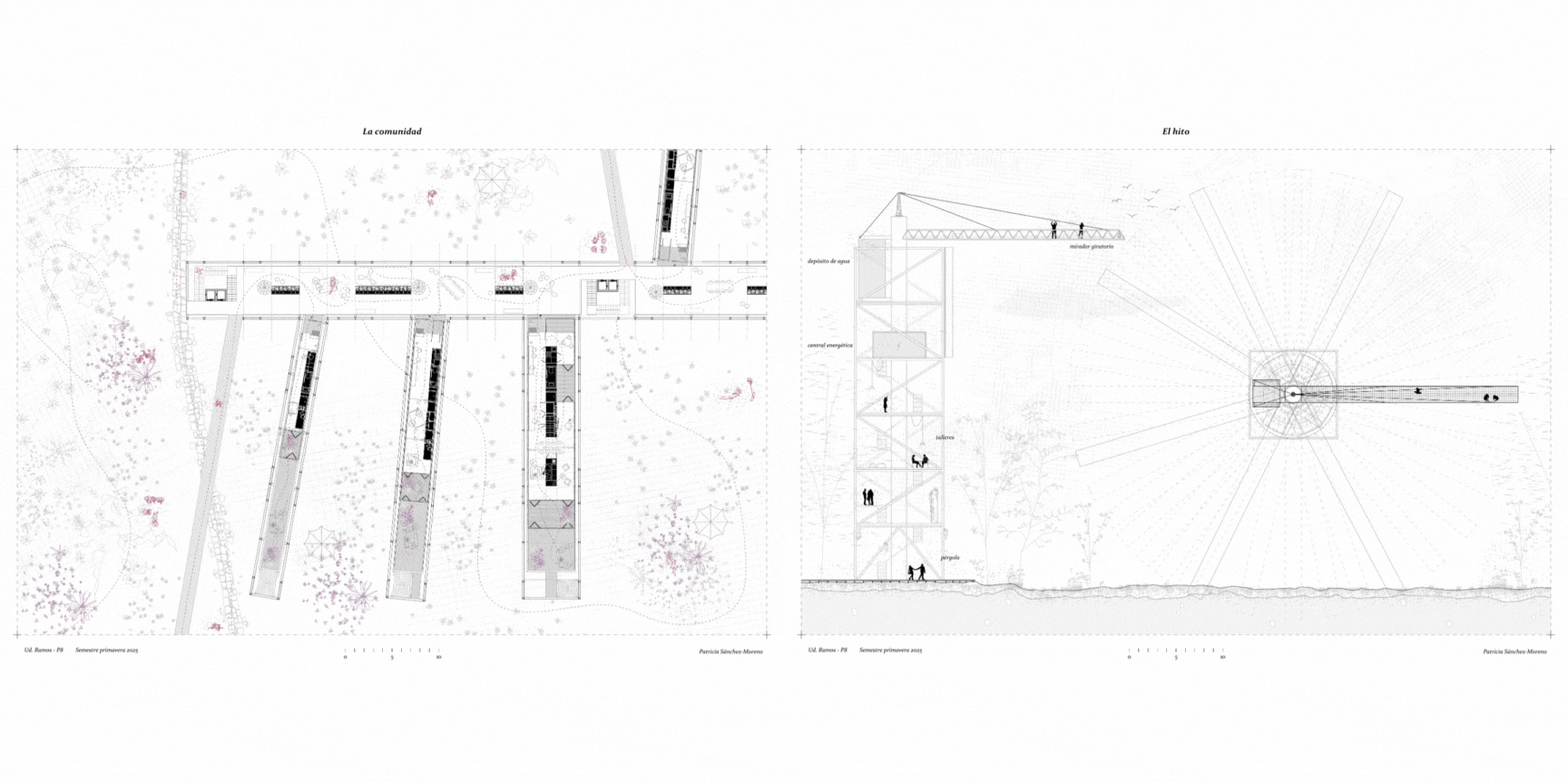
As the centrepiece of the habitat, a lookout tower is erected, providing energy, water and multiple services for the community. It acts as a social meeting point. This tower, which reinterprets again industrial machinery, becomes a landmark within the habitat.
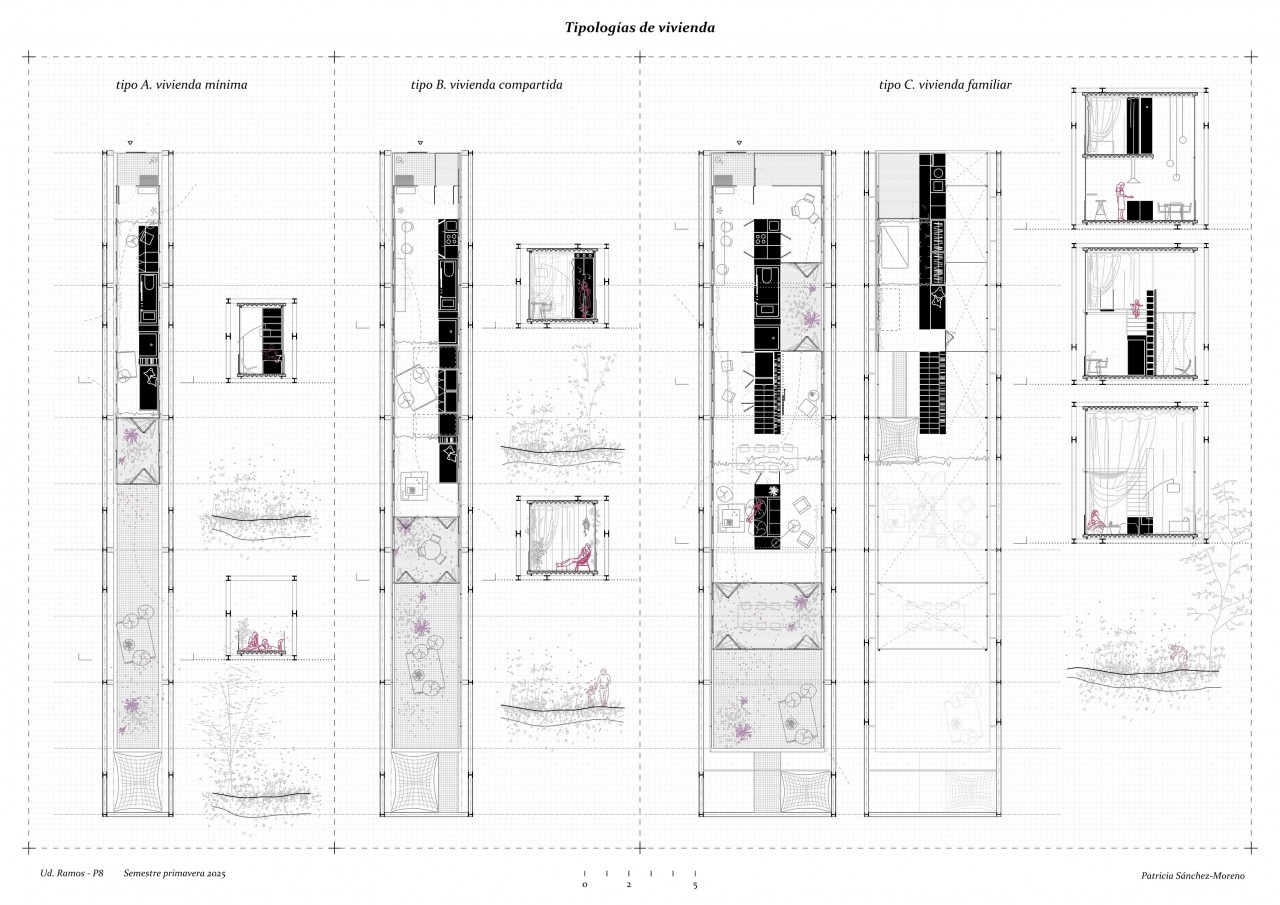
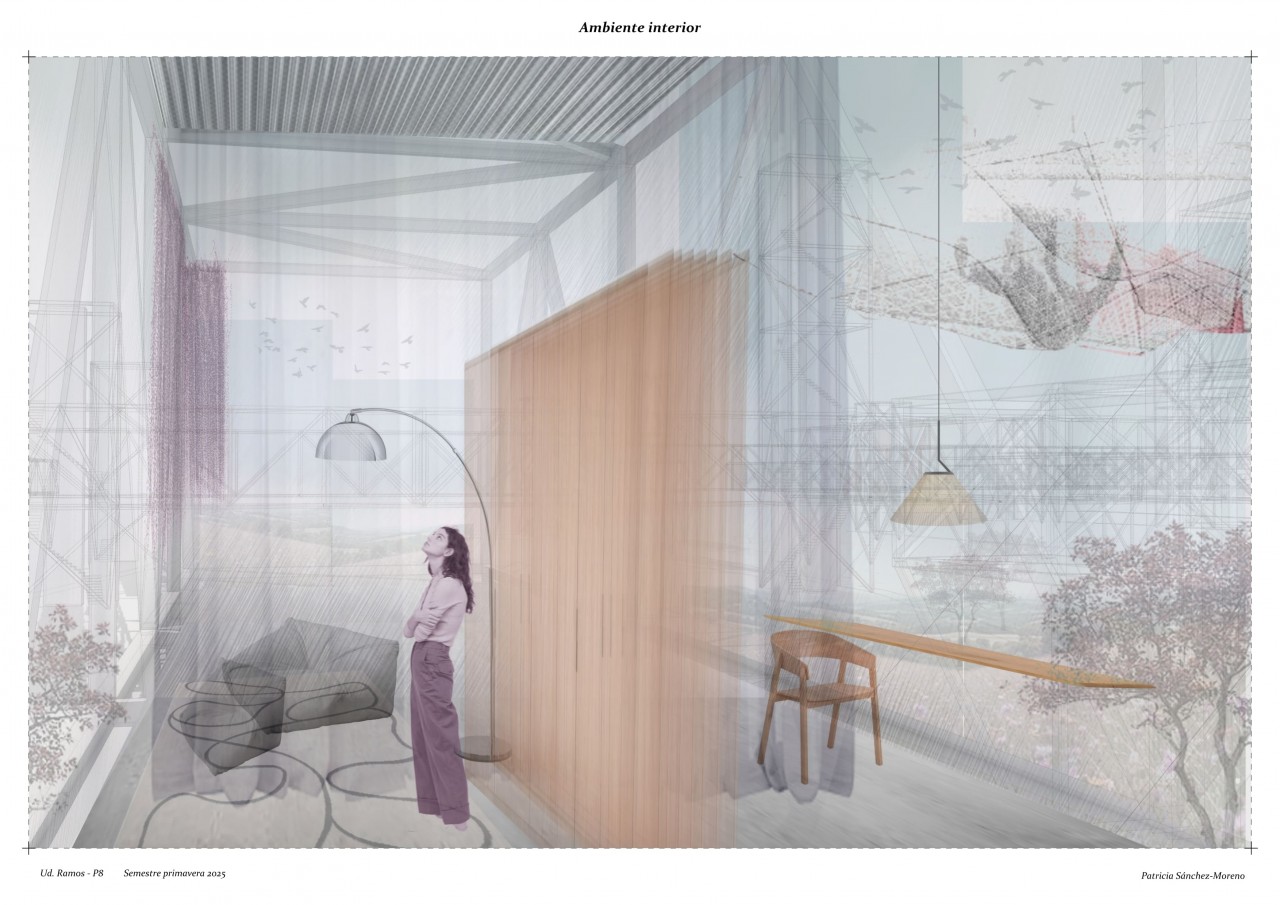
In the same vein, the dwellings are inserted within the trusses. Three types are proposed—a minimal, a shared and a family type—all governed by the same concept: a central spine that concentrates the most compact services—kitchen, toilet, storage, stairs...—to leave the rest of the space flexible and ending in a large open space. The aim is to enhance the linearity already marked by the truss structure and to generate different atmospheres along its length, which follow one another until they merge completely into the landscape, blurring the boundaries between interior and exterior.
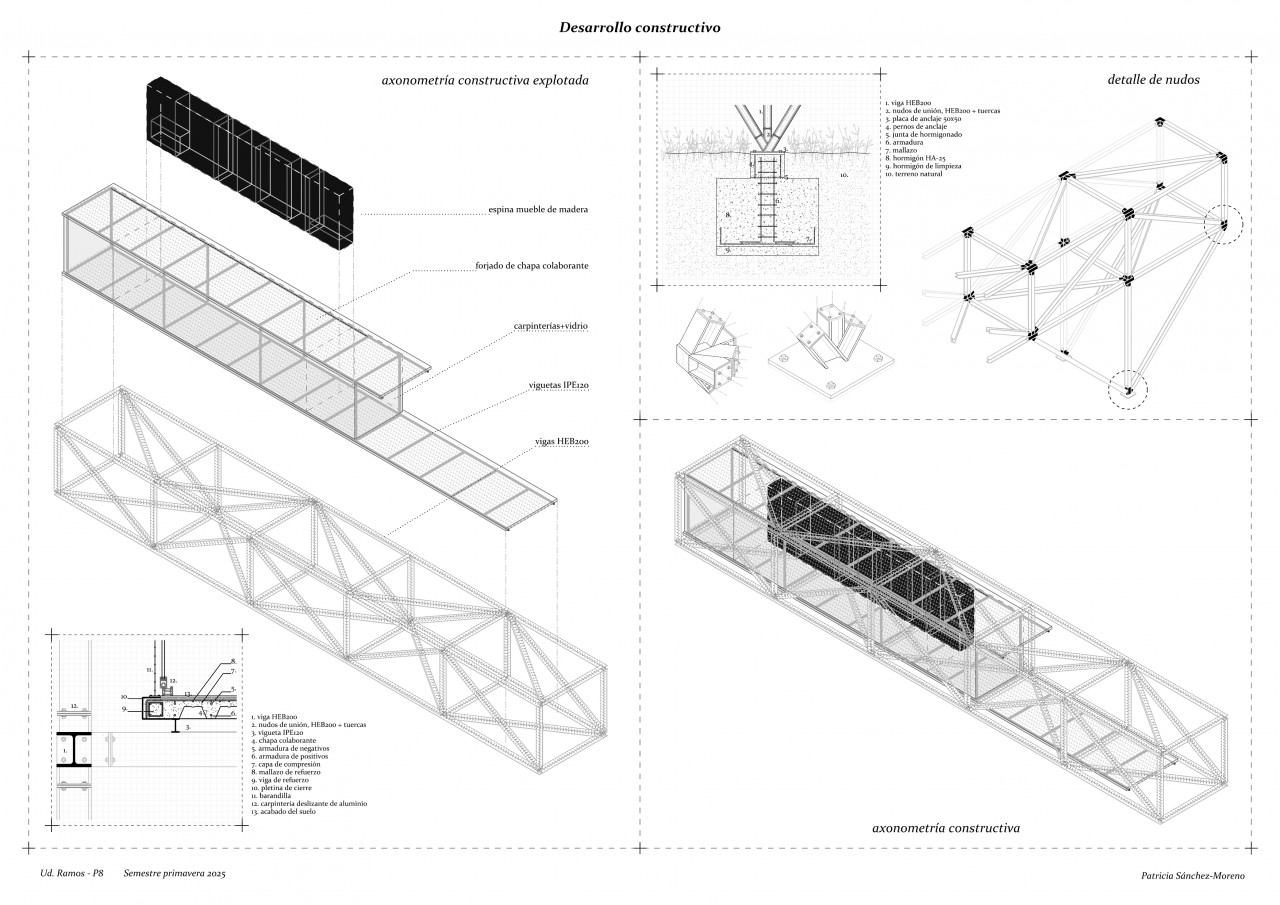
The entire structural assembly is designed around two elements: a metal exostructure that makes use of materials from the machinery in the area and that is joined together by nodes designed specifically for this purpose; and a substructure that allows for closures when necessary.
In this way, a controlled structure creates a landscape of elevated architecture in harmony with nature that is recovered, respected and preserved. It dignifies the history of the place and maintains its memory, creating a new way of living.
It is part of a master plan that aims to renaturalise and make this landscape habitable. It is based on the interconnection of the quarries through a three-dimensional grid that crosses them. The intersections of the grid become potential landmarks for generating habitats.
This project works on one of these habitats, located between an access road to the area, several quarries and the Jarama river. In this context, it explores the possibilities of reinterpreting the structure of mining machines, thinking them through to create new ways of inhabiting. The proposal is developed from the trusses that form the main body of these machines.
It is a system conceived as a network of connections into which the pieces that give meaning to the whole are inserted. A series of cores and turrets are implanted to provide access to bridge structures open to the landscape, where circulation widens to accommodate multiple programmes. They also provide access to the different dwellings, which appear to be in motion. Thus, the architecture rises above a renaturalised field that is to be left intact, to generate a higher plane of contemplation.
As the centrepiece of the habitat, a lookout tower is erected, providing energy, water and multiple services for the community. It acts as a social meeting point. This tower, which reinterprets again industrial machinery, becomes a landmark within the habitat.
In the same vein, the dwellings are inserted within the trusses. Three types are proposed—a minimal, a shared and a family type—all governed by the same concept: a central spine that concentrates the most compact services—kitchen, toilet, storage, stairs...—to leave the rest of the space flexible and ending in a large open space. The aim is to enhance the linearity already marked by the truss structure and to generate different atmospheres along its length, which follow one another until they merge completely into the landscape, blurring the boundaries between interior and exterior.
The entire structural assembly is designed around two elements: a metal exostructure that makes use of materials from the machinery in the area and that is joined together by nodes designed specifically for this purpose; and a substructure that allows for closures when necessary.
In this way, a controlled structure creates a landscape of elevated architecture in harmony with nature that is recovered, respected and preserved. It dignifies the history of the place and maintains its memory, creating a new way of living.

- 00 - Description
- 01 - Masterplan
- 02 - Developement + Site
- 03 - System Plan
- 04 - Axonometric
- 05 - Community + Landmark
- 06 - Housing typologies
- 07 - Construction
- 08 - Sections
- 09 - Interior atmosphere
- 10 - Exterior atmosphere