
NA-PLA
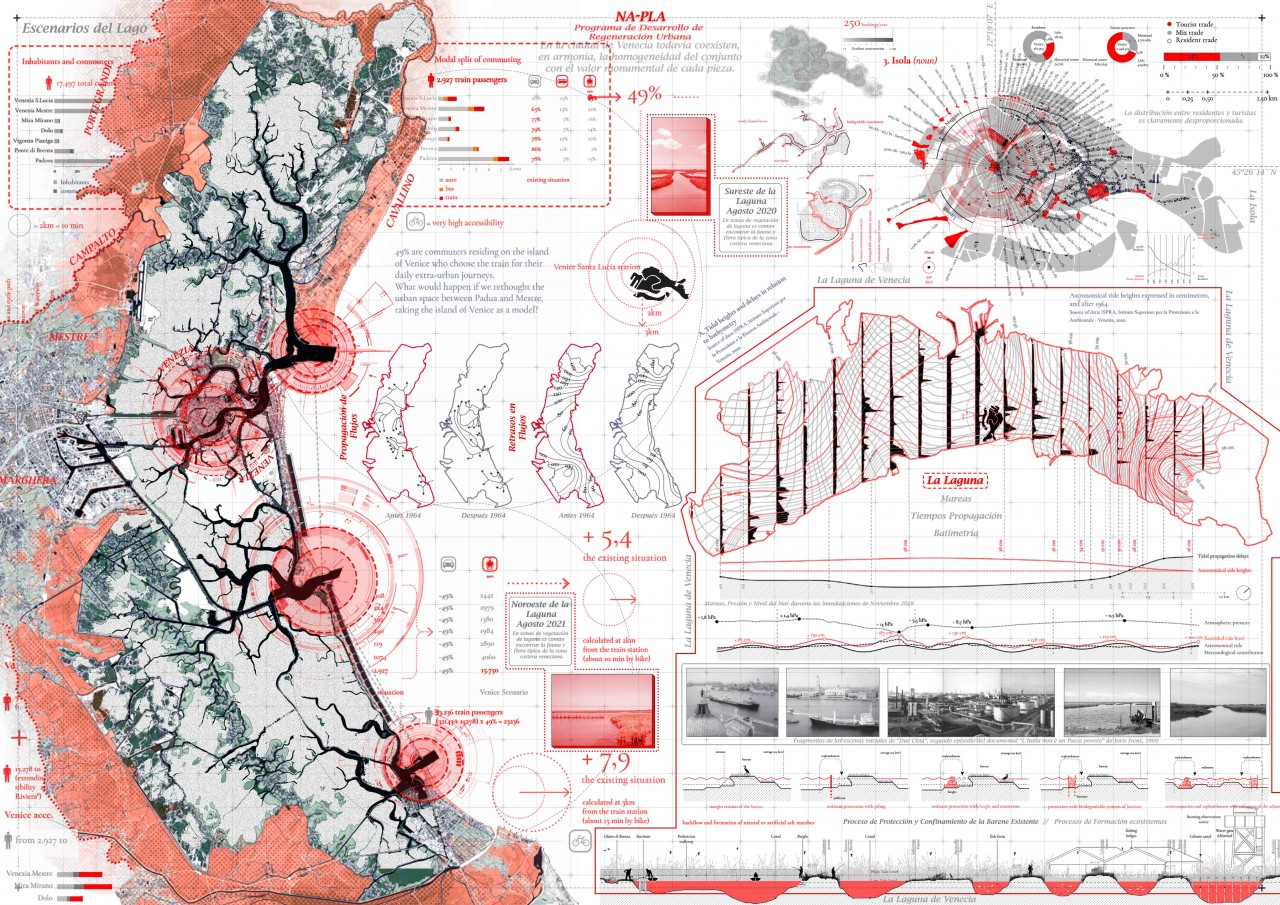
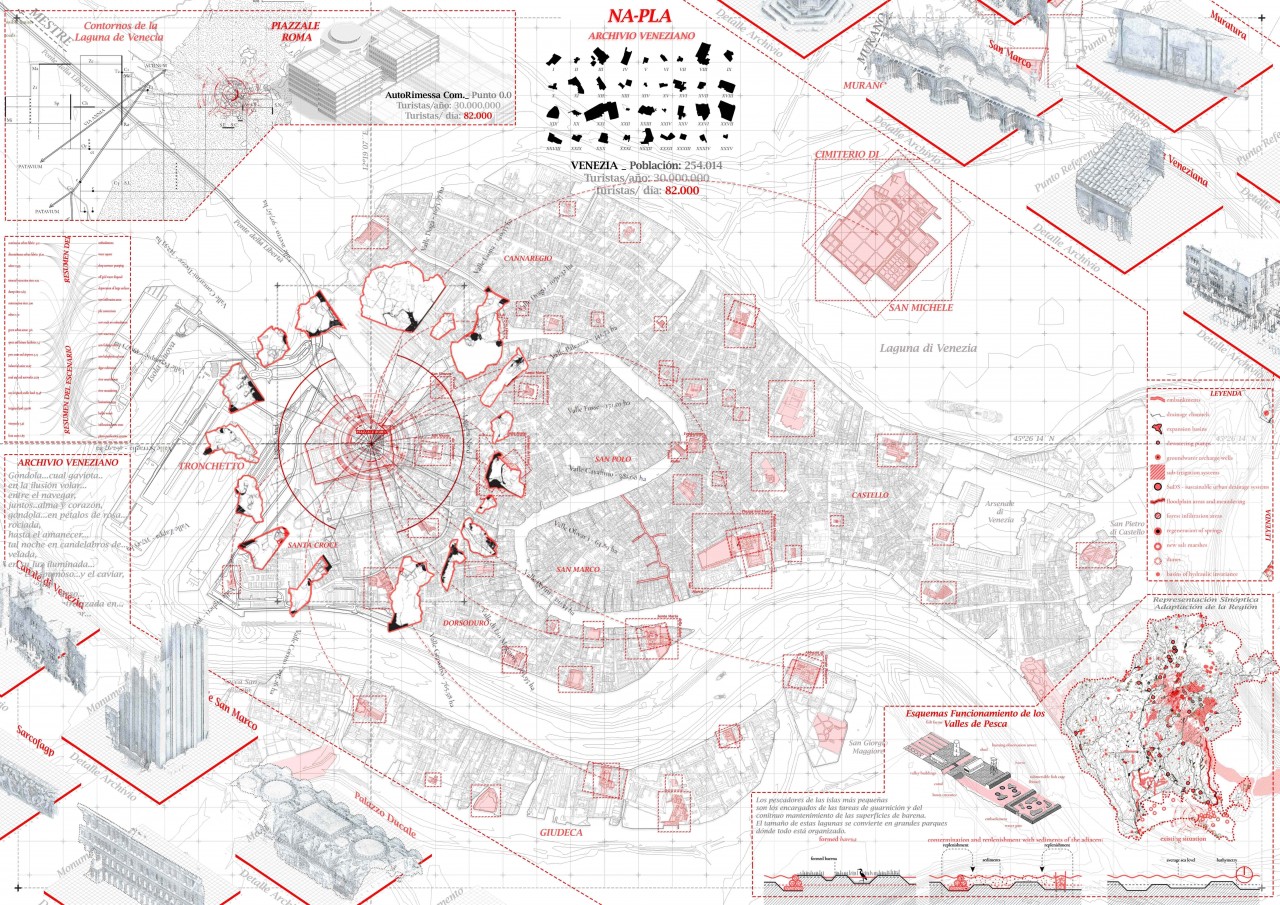
The project proposes an innovative reconfiguration of the city of Venice, transforming it into a living archive that preserves and communicates its historical, cultural, and architectural memory. Beyond a conventional building, this archive unfolds through the urban experience itself, turning the city into a narrative fabric in constant dialogue with its inhabitants and visitors.
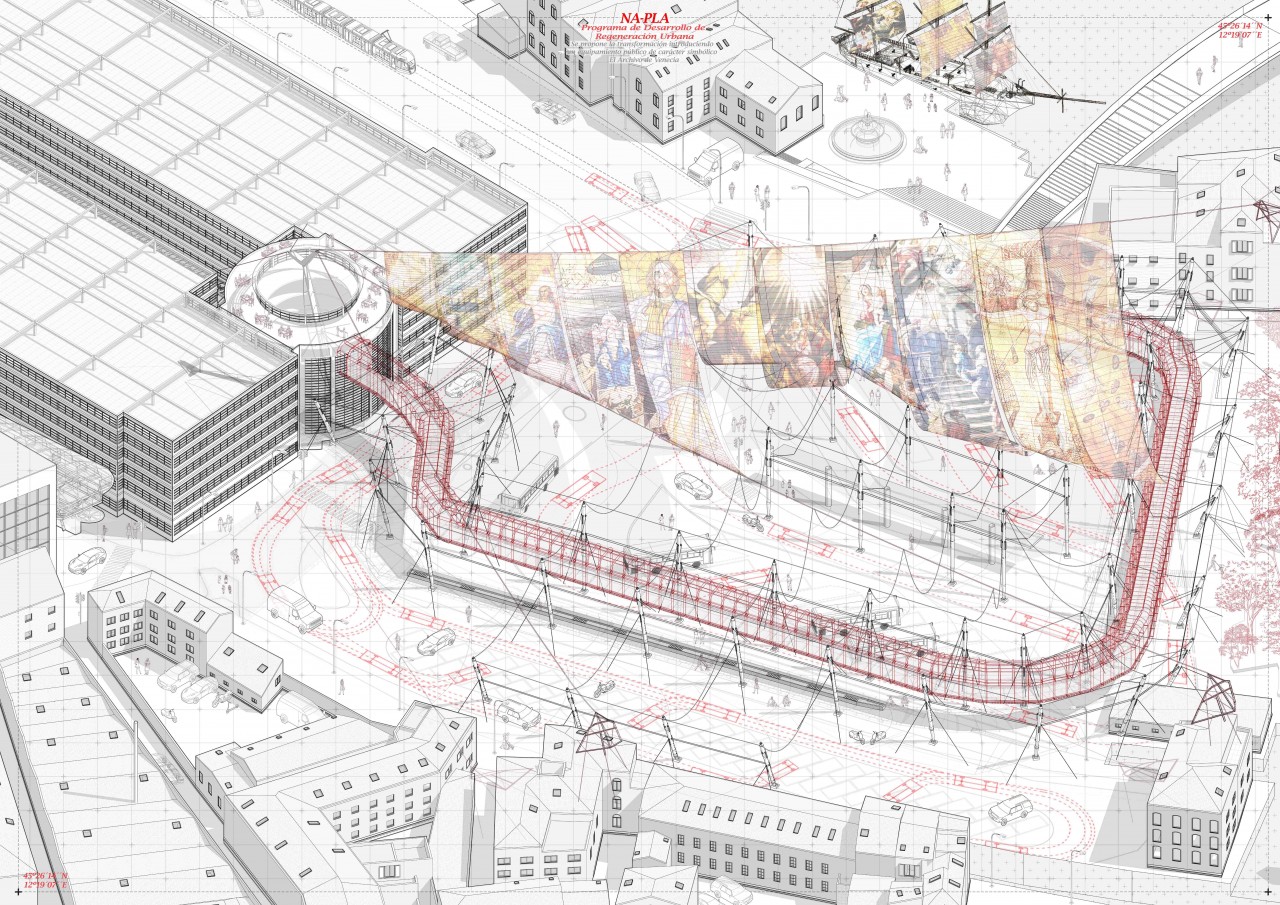
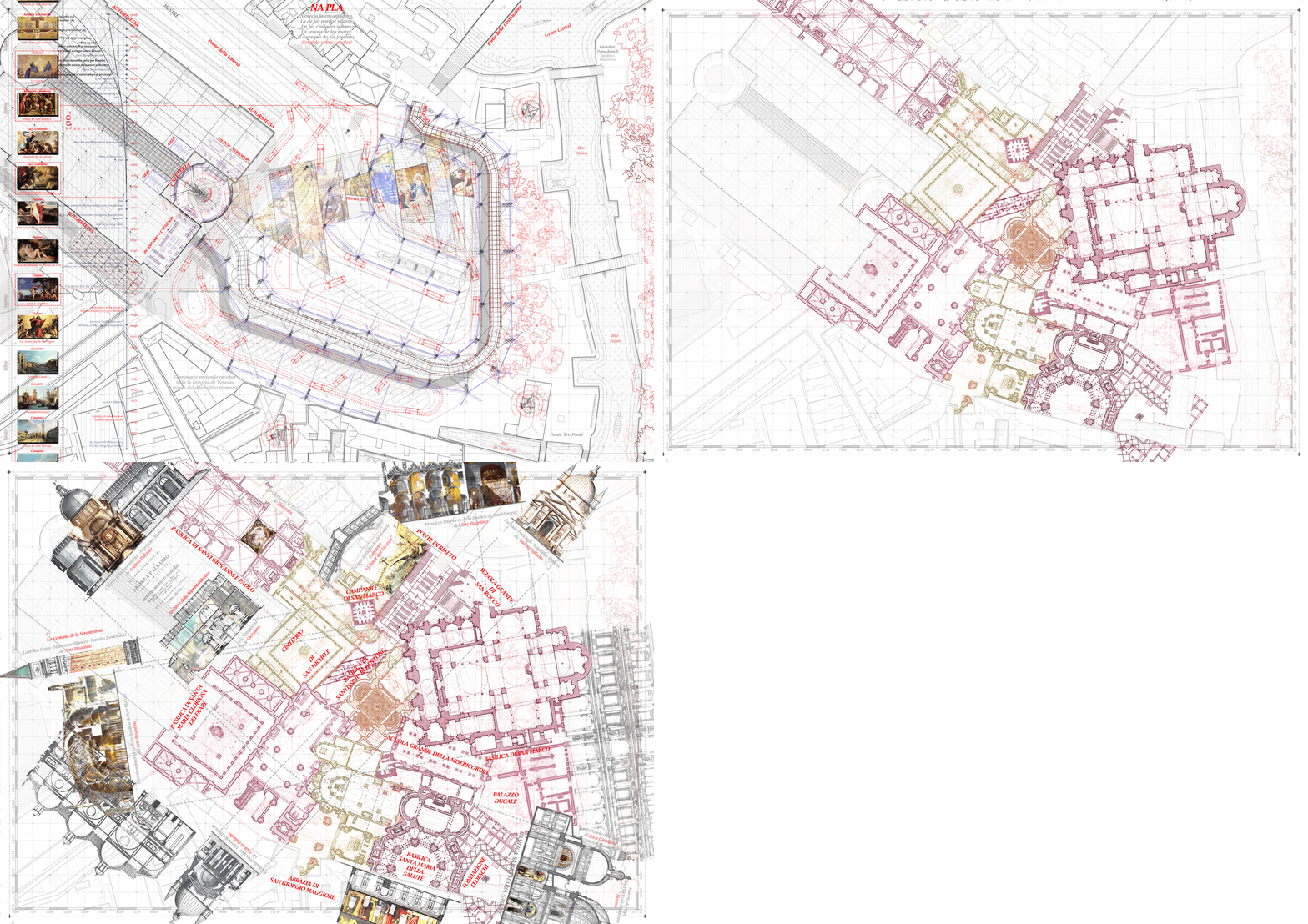
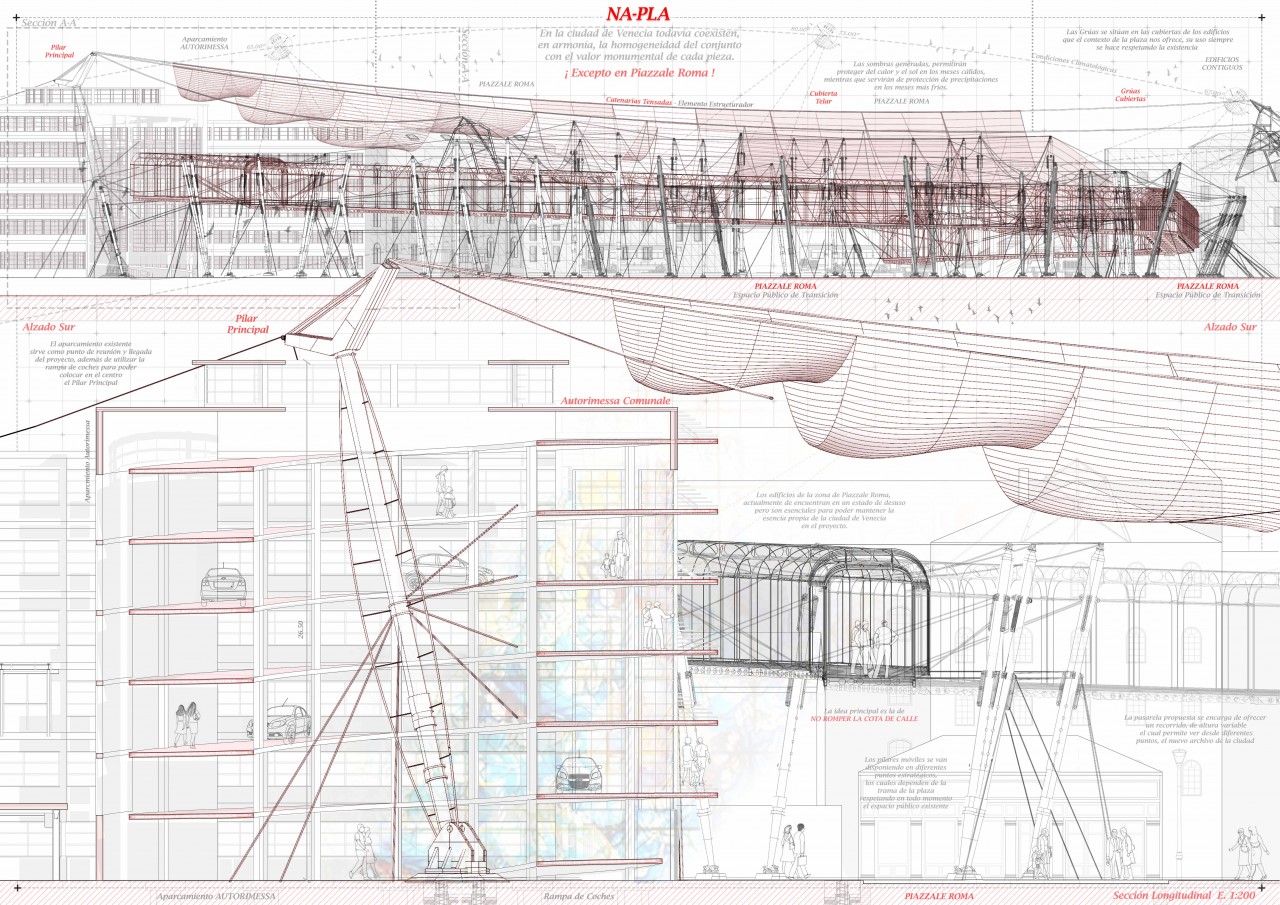
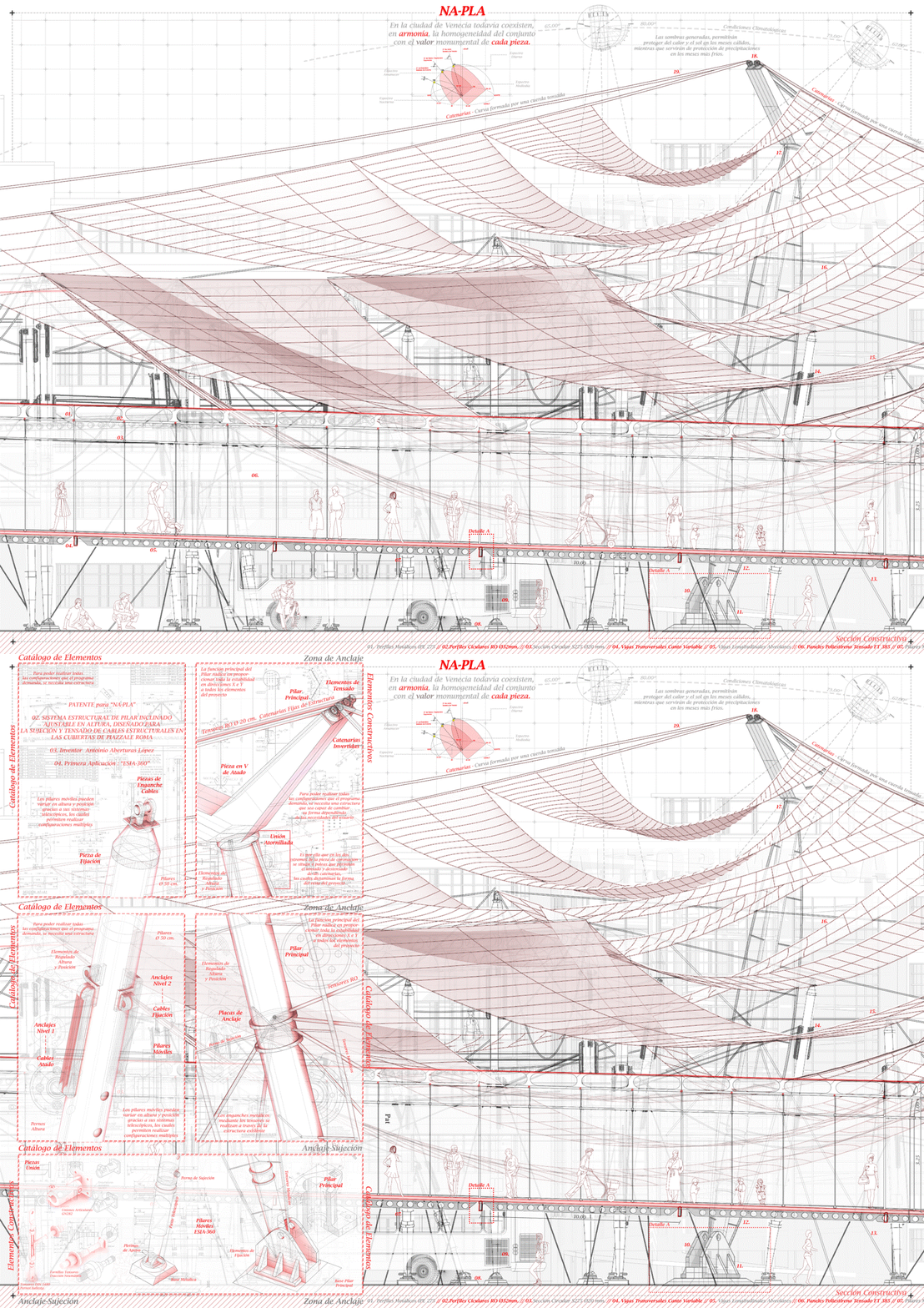
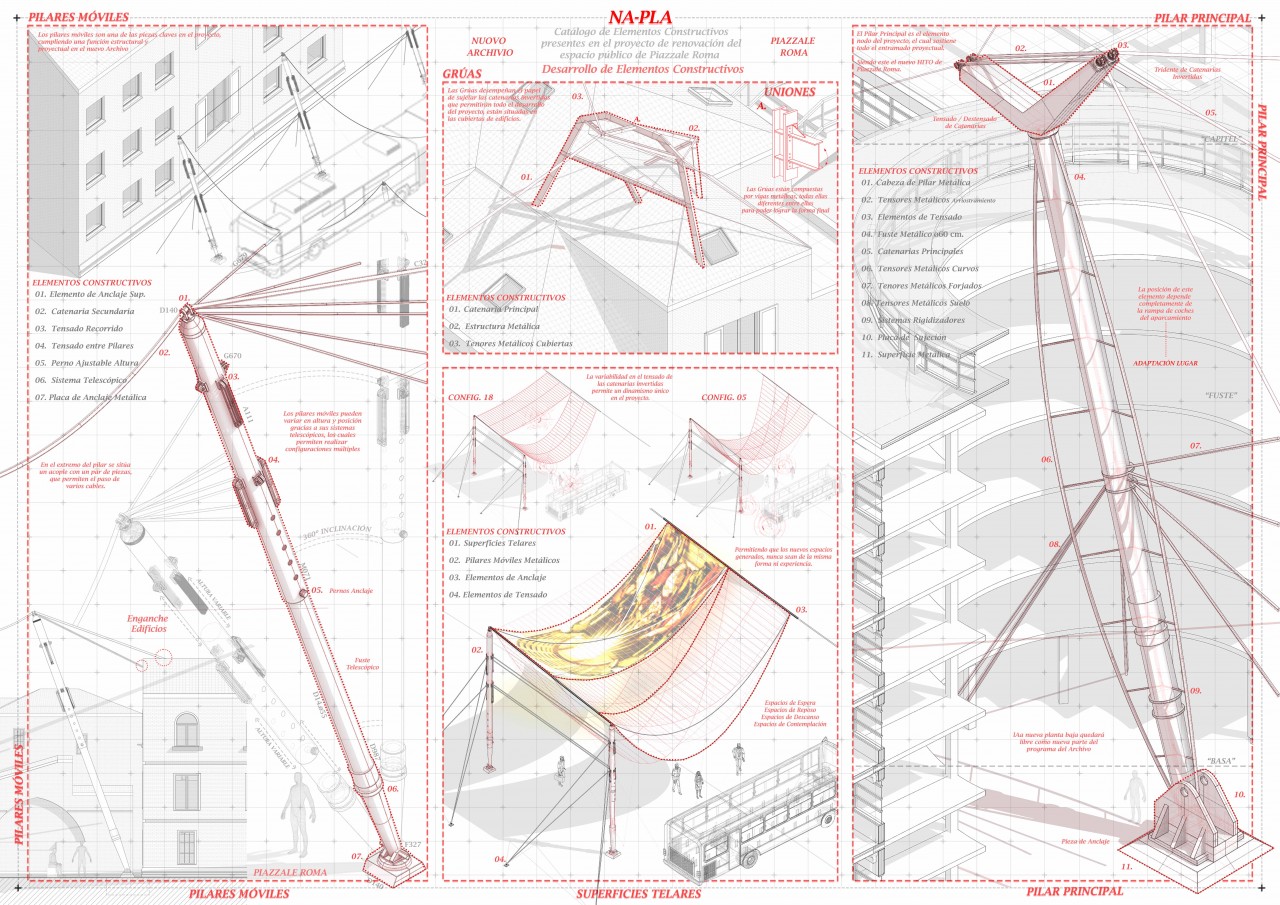
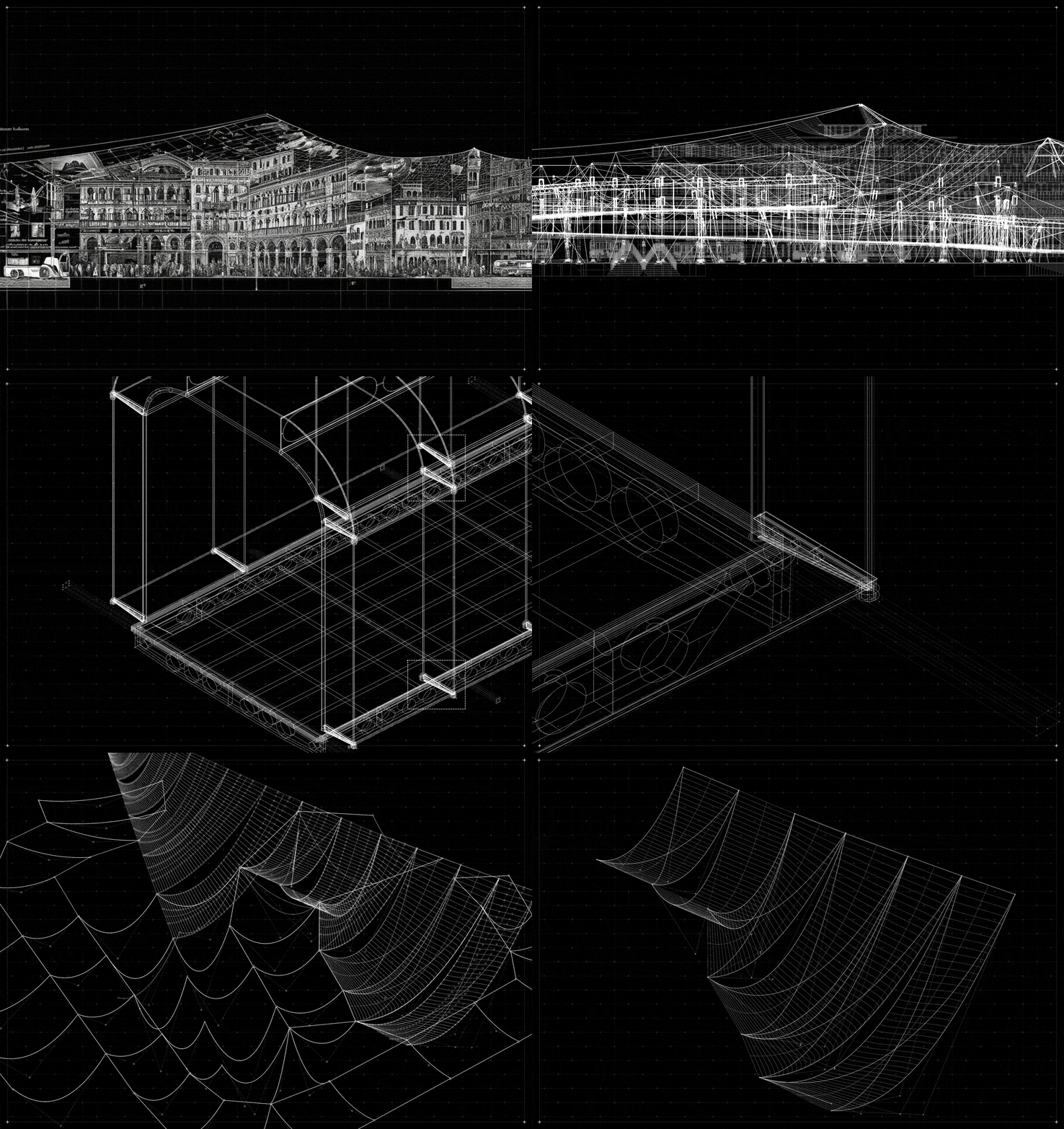
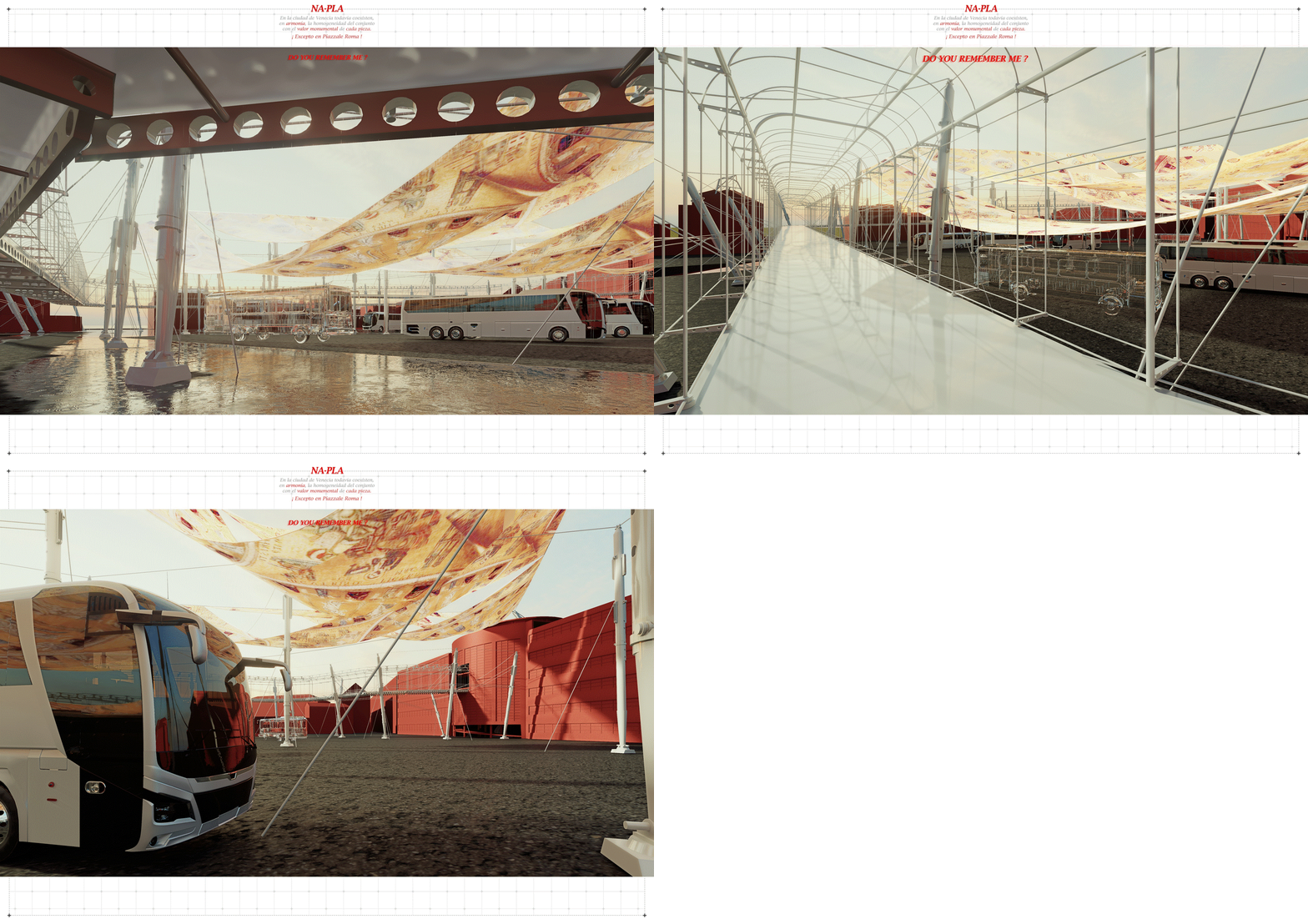
The main intervention is located in Piazzale Roma, a strategic hub of urban connectivity and mobility. Here, a dynamic system of catenaries is implemented, defining a covered and adaptable space designed to respond to climatic demands, particularly providing shelter from rain. These catenaries support a series of translucent and projective canopies that, in addition to their practical functionality, serve as a medium for displaying images from the Venetian archive. Thus, users are not only sheltered but are also immersed in a visual narrative that recontextualizes the past and integrates it into the present.
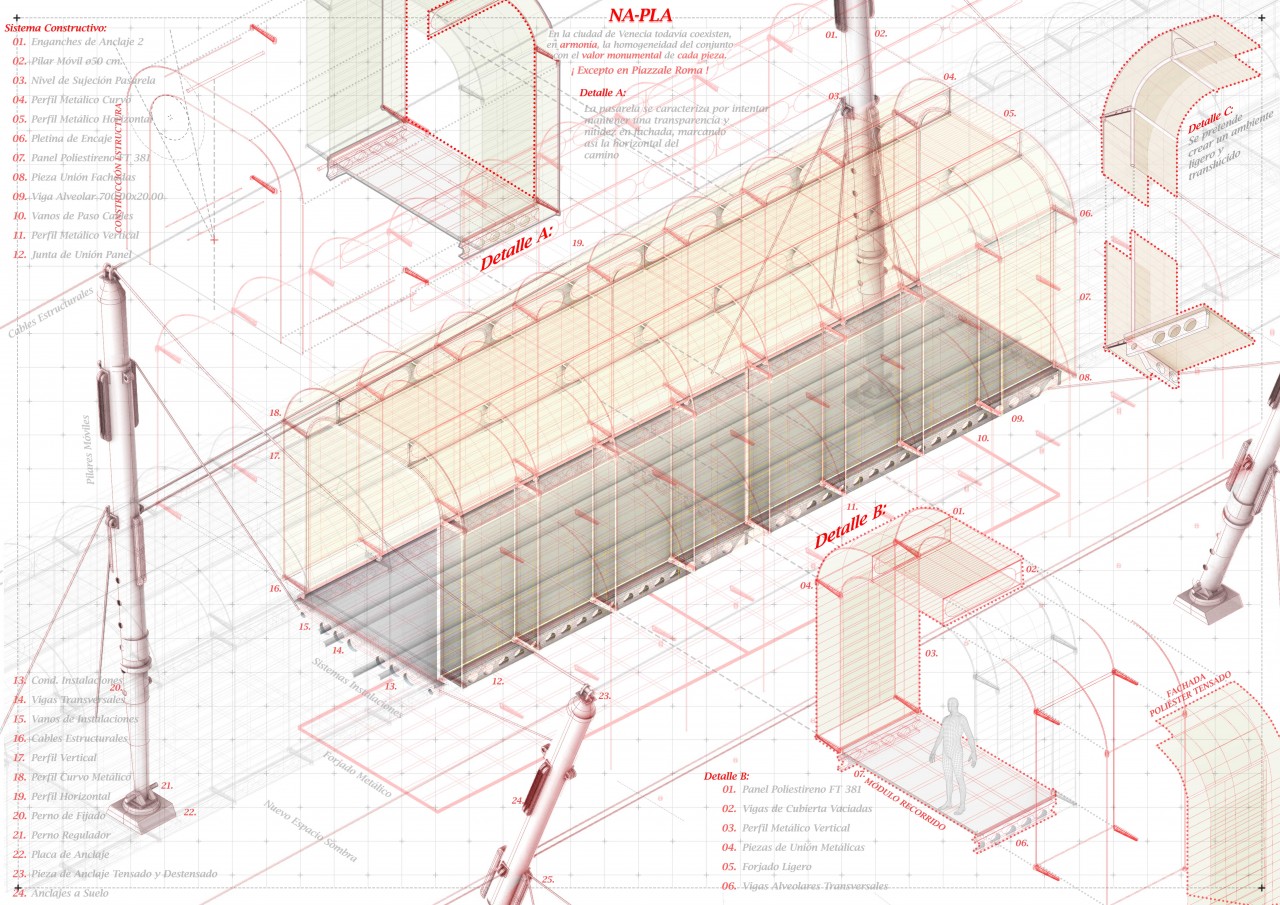
A progressively elevated pedestrian walkway weaves through the plaza, offering a contemplative journey that allows visitors to experience the archive from multiple perspectives. This pathway not only articulates the relationship between the visual projection and the urban space but also frames panoramic views of Venice, highlighting the interaction between the built environment and its historical identity.
The intervention addresses both the functional needs of citizens—providing a comfortable and sheltered space while waiting at the public transportation docks—and a symbolic, experiential dimension that invites the rediscovery of the city through a new lens. This dialogue between the utilitarian and the poetic reinforces the dynamic and participatory character of Venice as a living archive, where architecture acts as a mediator between time, space, and collective memory.
The main intervention is located in Piazzale Roma, a strategic hub of urban connectivity and mobility. Here, a dynamic system of catenaries is implemented, defining a covered and adaptable space designed to respond to climatic demands, particularly providing shelter from rain. These catenaries support a series of translucent and projective canopies that, in addition to their practical functionality, serve as a medium for displaying images from the Venetian archive. Thus, users are not only sheltered but are also immersed in a visual narrative that recontextualizes the past and integrates it into the present.
A progressively elevated pedestrian walkway weaves through the plaza, offering a contemplative journey that allows visitors to experience the archive from multiple perspectives. This pathway not only articulates the relationship between the visual projection and the urban space but also frames panoramic views of Venice, highlighting the interaction between the built environment and its historical identity.
The intervention addresses both the functional needs of citizens—providing a comfortable and sheltered space while waiting at the public transportation docks—and a symbolic, experiential dimension that invites the rediscovery of the city through a new lens. This dialogue between the utilitarian and the poetic reinforces the dynamic and participatory character of Venice as a living archive, where architecture acts as a mediator between time, space, and collective memory.
- 00 - Description
- 01 - RESEARCH
- 02 - VENEZIA
- 03 - PIAZZALE ROMA
- 04 - PHASE 1
- 05 - PHASE 2
- 06 - PHASE 3
- 07 - PROJECT ELEMENTS 1
- 08 - PROJECT ELEMENTS 2
- 09 - SCALES
- 10 - IMAGES
- 11 - Video