
NET
Fort San Pedro
Iloilo, Philippines
Year 2023
The area has suffered historical deterioration and is in ruins, the old infrastructures that promoted fishing, commerce and boosted the economy of the area are in disuse and faces a high risk of destruction due to tsunamis and rising ocean levels. The water is heavily polluted.
What would happen if we did not act?
Year 2063: Sea levels have risen nearly half a meter, homes are flooded, rafters suffer from countless plagues of disease, and natural disasters prevent the area from recovering. The economy is unsustainable, Fort San Pedro remains uninhabited.
During this course, and based on a thorough analysis of the Philippines and its social, environmental, political and economic threats, a project proposal is put forward that seeks to prevent the destruction and complete abandonment of the area. It is clear that if action is not taken now, destruction will be inevitable.
The project aims to prevent the destruction of existing structures, improve the local economy, promote biodiversity and regeneration, protect the city from catastrophes and create a new economic system based on the use of plastic waste.
To achieve these objectives, several programs are proposed:
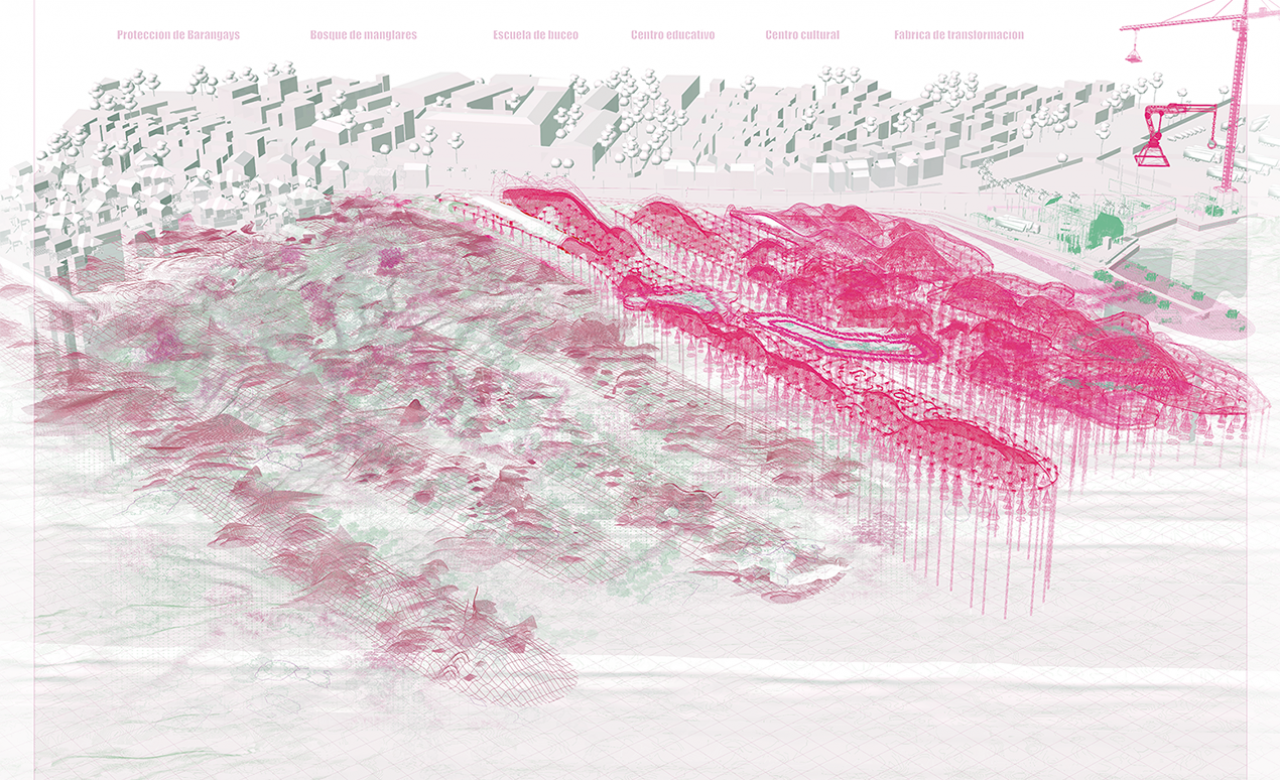
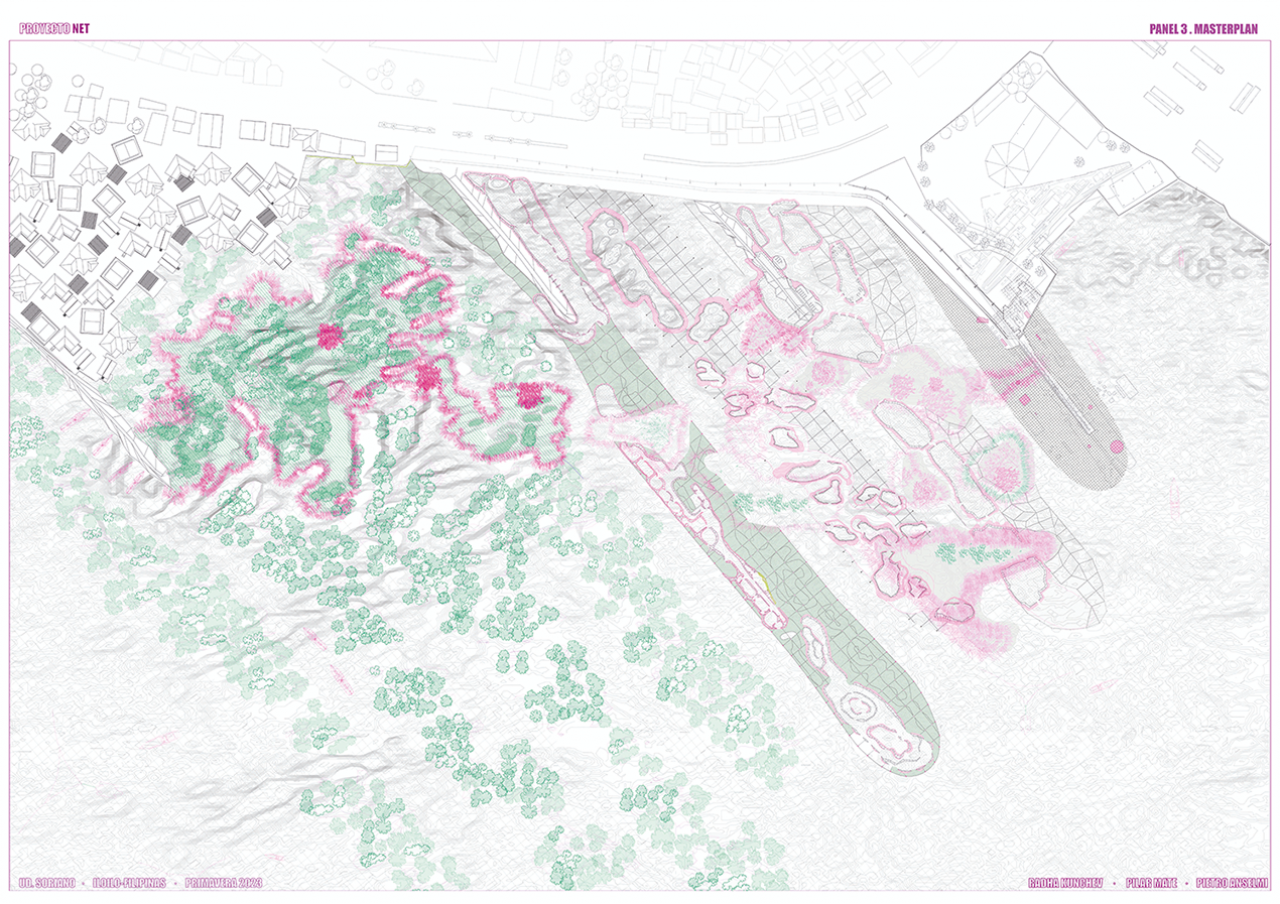
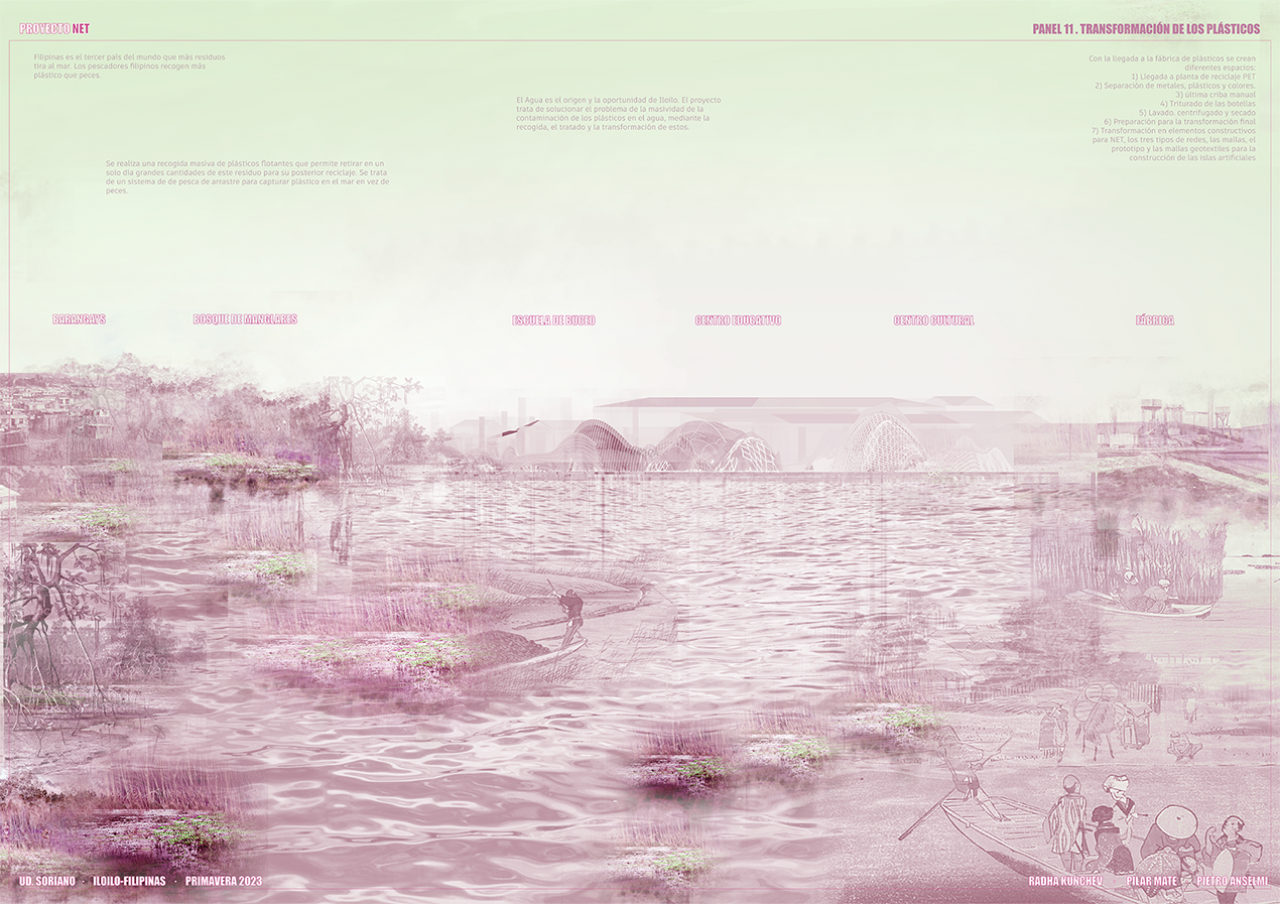
1- A natural mangrove forest, situation in front of the houses in the west zone that will be used as a natural protective barrier against tsunamis and other natural catastrophes. A survey of existing mangroves will be conducted and mangrove forests will be created to protect vulnerable coastal communities.
2- A Dive Center that seeks to reconnect the people of Iloilo with the water and promote cleanliness and knowledge of the marine world. It will be connected to the mangroves to promote the repopulation of endangered species and serve as a common gathering space.
3- A school center to combat the high illiteracy rate and promote knowledge of native species and plastic recycling.
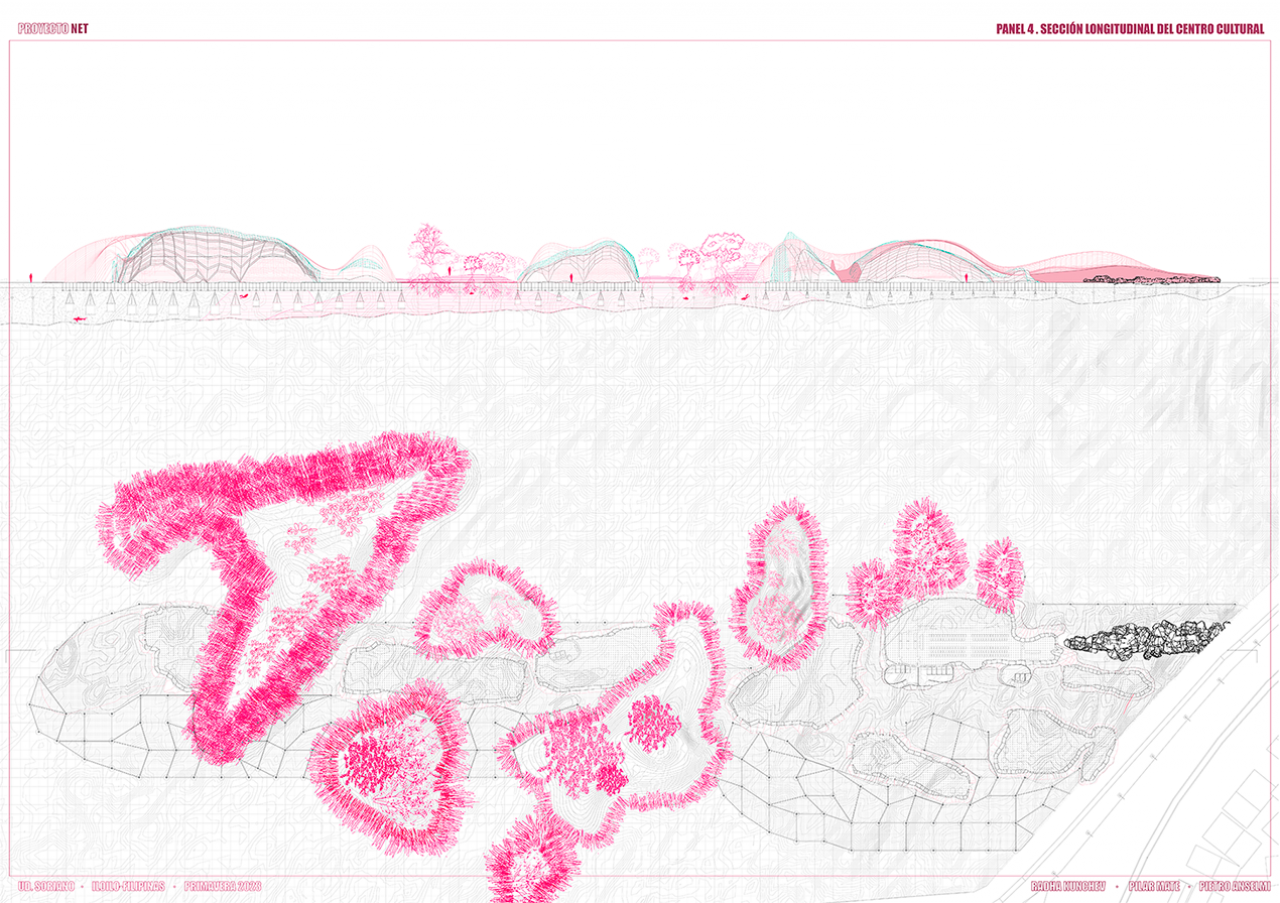
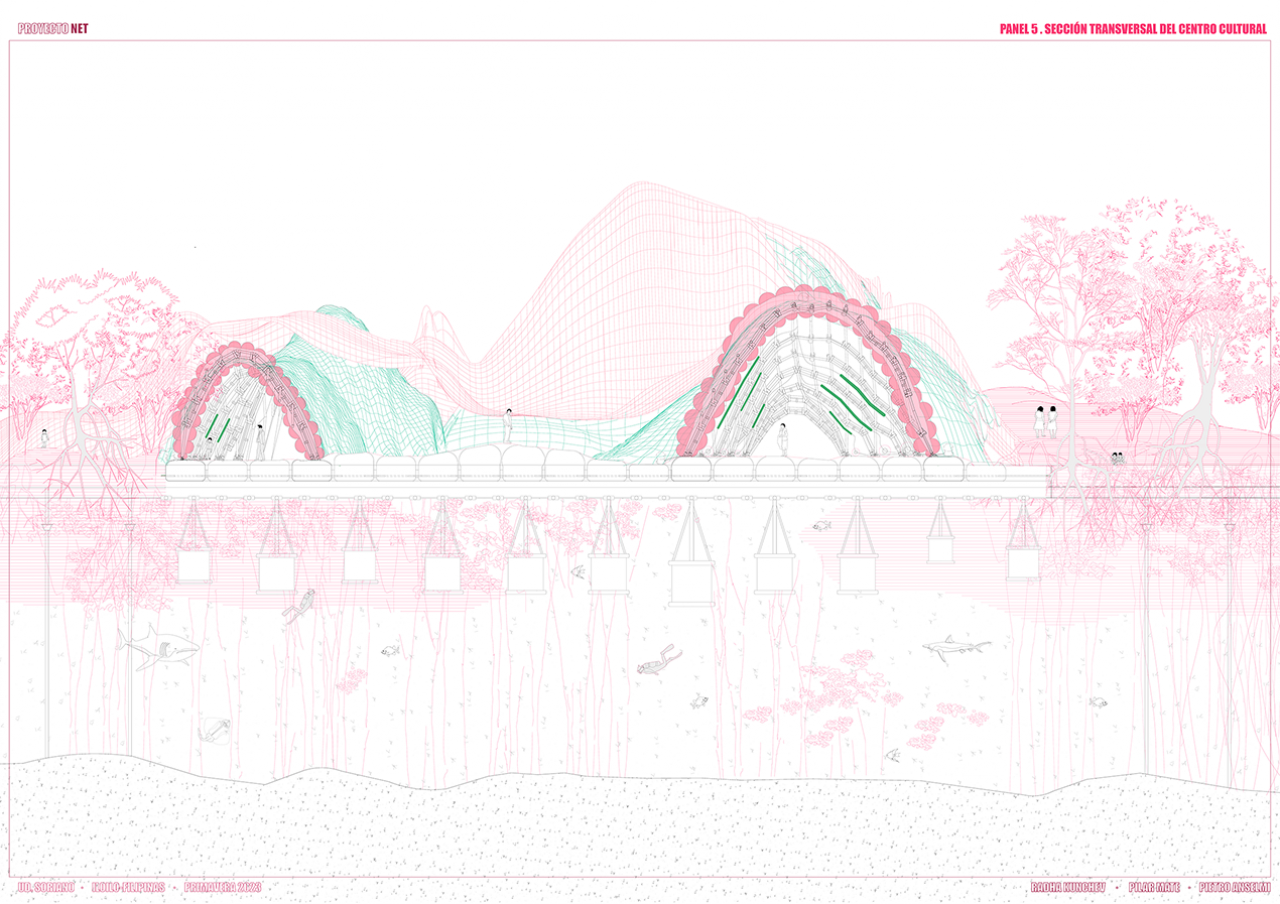
4- A Cultural Center that will offer courses in plastic transformation, recycling and sustainability, as well as spaces for artistic and cultural activities.
5- The Factory, which will be in charge of the massive collection of plastics in the sea and its subsequent recycling in a specialized plant. A process of separation and crushing of plastics will be carried out for their transformation into constructive elements.
Iloilo, Philippines
Year 2023
The area has suffered historical deterioration and is in ruins, the old infrastructures that promoted fishing, commerce and boosted the economy of the area are in disuse and faces a high risk of destruction due to tsunamis and rising ocean levels. The water is heavily polluted.
What would happen if we did not act?
Year 2063: Sea levels have risen nearly half a meter, homes are flooded, rafters suffer from countless plagues of disease, and natural disasters prevent the area from recovering. The economy is unsustainable, Fort San Pedro remains uninhabited.
During this course, and based on a thorough analysis of the Philippines and its social, environmental, political and economic threats, a project proposal is put forward that seeks to prevent the destruction and complete abandonment of the area. It is clear that if action is not taken now, destruction will be inevitable.
The project aims to prevent the destruction of existing structures, improve the local economy, promote biodiversity and regeneration, protect the city from catastrophes and create a new economic system based on the use of plastic waste.
To achieve these objectives, several programs are proposed:
1- A natural mangrove forest, situation in front of the houses in the west zone that will be used as a natural protective barrier against tsunamis and other natural catastrophes. A survey of existing mangroves will be conducted and mangrove forests will be created to protect vulnerable coastal communities.
2- A Dive Center that seeks to reconnect the people of Iloilo with the water and promote cleanliness and knowledge of the marine world. It will be connected to the mangroves to promote the repopulation of endangered species and serve as a common gathering space.
3- A school center to combat the high illiteracy rate and promote knowledge of native species and plastic recycling.
4- A Cultural Center that will offer courses in plastic transformation, recycling and sustainability, as well as spaces for artistic and cultural activities.
5- The Factory, which will be in charge of the massive collection of plastics in the sea and its subsequent recycling in a specialized plant. A process of separation and crushing of plastics will be carried out for their transformation into constructive elements.




- 00 - Description
- 01 - axonometricview
- 02 - masterplan
- 03 - axonometriclayers
- 04 - ccsectionplan
- 05 - schoolsection
- 06 - divingschoolplans
- 07 - schoolspaceboard
- 08 - plasticprocessing
- 09 - temporality
- 10 - Video